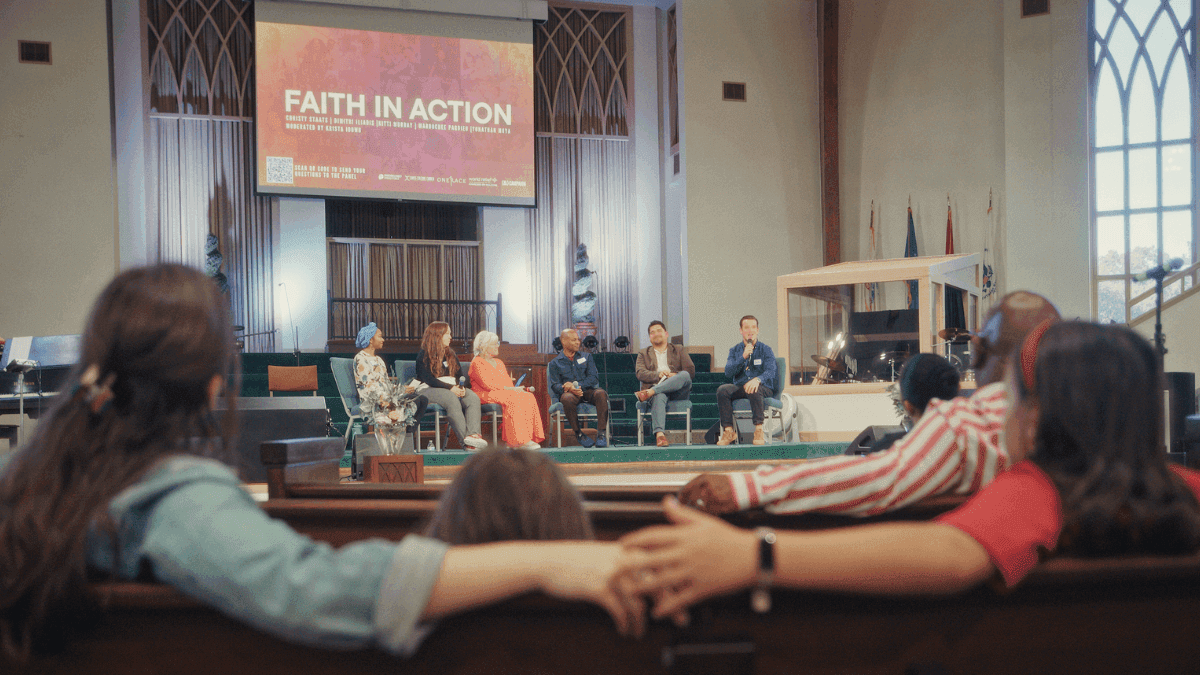
A Q&A with Krista Idowu and Abrm McQuarters of The And Campaign
In a time when so many issues are framed as either/or, The AND Campaign invites people to consider a different approach. Their work brings together Christians, community leaders, and advocates to engage communities based on shared values rather than partisan talking points. Welcome.US spoke with The AND Campaign’s Krista Idowu, Immigration Advocacy Director, and Abrm McQuarters, Chapter Development Coordinator, about their approach, how communities respond, and how it relates to loving our immigrant neighbors.
The AND Campaign has a unique founding story. How does the collective vision of a pastor, artist, and lawyer create a movement that bridges faith and politics?
Abrm: If they were able to stand here, I think their collective story would be that, as they looked out over the public landscape, they shared a faith and were Christians in their respective spaces. More than that, they saw how culture was dictating how Christians expressed their values, rather than Christian values dictating how they expressed themselves.
Being longtime attorneys and working in local politics, they found that no political party was responsive to Christian values, only to partisan agendas. They saw the importance of making decisions based on value, not just talking points. Each of them represented a different sector that looked out into the public sphere and said, “I don’t really see my values reflected.”
They considered the idea of everyday citizens being able to speak into the public sphere again with some influence, with their values leading the way rather than the other way around.
They were all leaders and visionaries, and they captured what the AND Campaign is all about, pooling efforts together and uniting the church in action. Partisan politics has done a really good job of driving the church apart from itself.
To show what a shared voice looks like for the good of their neighbors, sticking to it through divisive election cycles, it takes vision and also credibility. As culture continues to take positions that don’t align with your values, you have to continue to articulate those values, even when not politically aligned, even when it may not be popular, because these are shared values rooted in our faith.
The AND Campaign often references the “false choice” between social justice and moral order. What does that mean to you, and how does The AND Campaign offer another way?
Krista: The social climate in our culture is very polarized right now. Many people have this false belief that social justice is at odds with the moral order. I’ve even heard some Christian leaders say that social justice is a distraction from the Gospel and a threat to conservative Christian values.
On the flip side, others who feel connected to the social justice space may feel that they have to compromise their spiritual convictions to advocate for it.
The AND Campaign offers a third option that upholds both moral order and spiritual conviction without sacrificing compassion for all human beings, created in the image of God, and advocates for policies that uphold and affirm human dignity.
That’s where the and comes into our name: It’s moral order and social justice, compassion and conviction.
Abrm: This choice comes through in the ways that we talk about the issues that impact people in very nuanced ways. When we talk about the immigration issue, are we advocating for the foreigner who has to leave their home because of political or religious persecution, or are we advocating for those who have been there for generations?
The Christian values state that you don’t have to choose. Each has dignity; each has basic needs. There’s this false dichotomy that political parties pose to gain power. Our values don’t split those two things; they hold them together.
That’s just one example of the false choice that many people think they have to make when it comes to partisan politics. Our culture splits issues apart that could otherwise be one; it forces you to make a choice that shouldn’t need to be made. It can be both surprising and refreshing for people to learn that they don’t have to make a choice. Many people worry they will have to make concessions to the other “side,” but we emphasize that we’re not trying to score points for any political party.
We’re advocating for the people who want common-sense, bipartisan legislation and action. The Constitution and framework of American society are that this should be a place where all people can flourish.
One priority for the organization is to unite and mobilize faith leaders and believers around loving our immigrant neighbors. How do you achieve that with a faith-forward, apolitical approach?
Krista: I can remember as far back as 2018 that we’ve been talking about this issue. It wasn’t until January of 2024 that we fully dove in. I was pursuing my Master’s in Public Health, studying immigrant and refugee health, when I reached out to Justin [Justin Giboney, Founder & President] and asked if we could do something about this.
We first created a video encouraging Christians to stand alongside our immigrant neighbors. He recognized that a video could only do so much, and what we really needed to do was bring people together—government leaders, church leaders, Christians who care about the issue or want to learn more—to pray and seek God’s guidance.
When we looked into the planning, we considered what the Bible says on this, what people are already doing, and the facts. There is so much rhetoric in the news and media, and we knew we had to understand what was actually happening and what we could do.
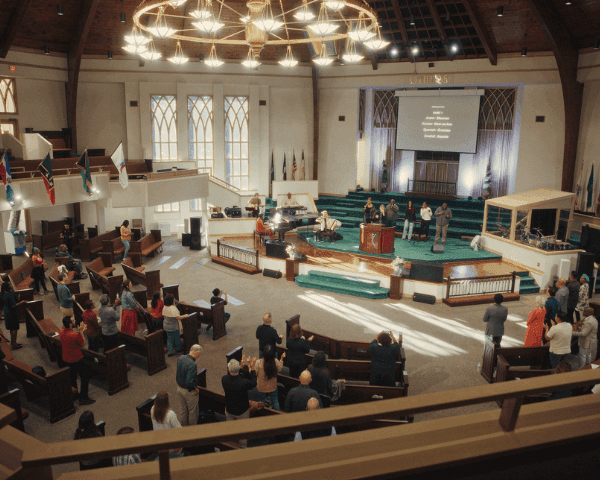
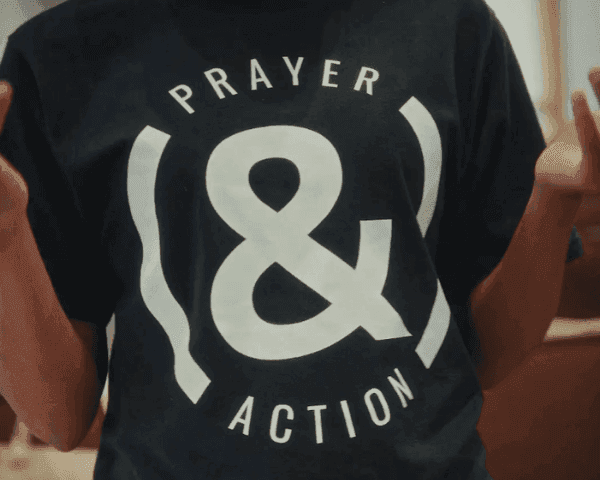
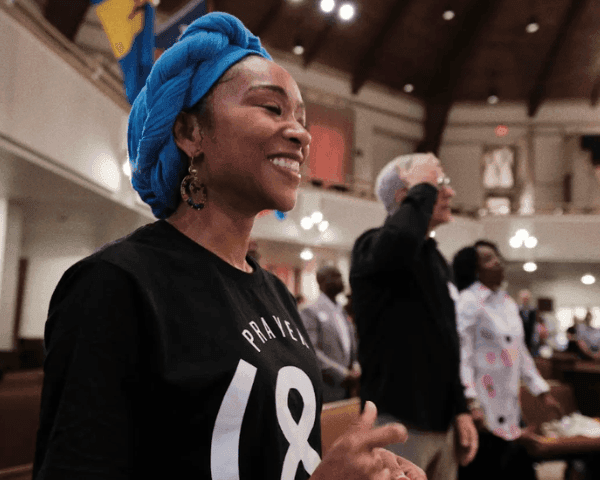
In October 2024, we hosted the Prayer in Action Summit. We brought together about 125 people from 11 states and about eight countries across sectors. We had people from government, business, the arts, and healthcare. We learned from people who work in the immigration space about what’s happening in their communities and how we could get involved.
The next part of this was figuring out how to take an apolitical approach. We needed to figure out how to unite faith believers with this faith-forward apolitical approach around the immigration issue. We needed to recognize the shared humanity of every person, as demonstrated in scripture.

We affirm that, for everyone, regardless of their country of origin, skin color, immigration status, or political affiliation, we share a humanity.
We apply those biblical principles to demonstrate God’s heart and call for Christians to welcome the stranger throughout all of Scripture. This is the both/and part: Jesus also commanded us to love our enemies, and that part isn’t as easily digestible.
The policies we advocate for, like the Dignity Act and the Dreamers Act, are bipartisan and acknowledge the need for national security. We believe in treating our immigrant neighbors with dignity and humanity, despite their immigration status.
We don’t have to choose between national security and dignity: It’s both.
How has your congregation reacted to the discussions on the immigration issue? Was it well received?
Abrm: We’ve had a great response to engaging with the issue. The Christian faith has clear conversations on how to treat the foreigner. It also has clear teachings on obeying authorities, which some political parties use to further their agenda. For a while, Christians were caught in the middle, hearing their values articulated by both sides.
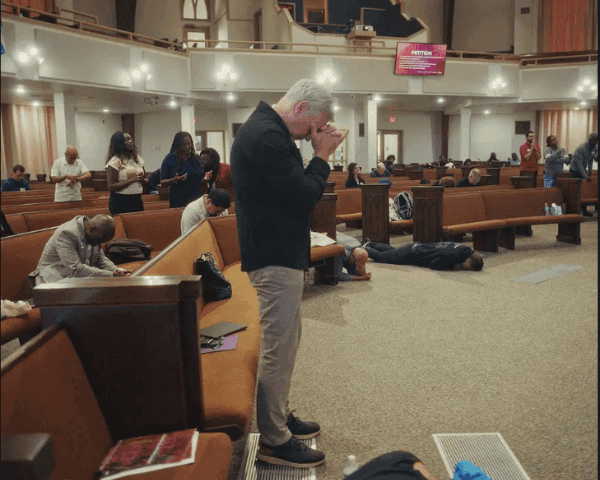
It was helpful for us to step in to say, “If there’s ever an issue that’s pulling you to choose one side or the other, or live half of your values, then there’s a false dichotomy being offered to you. There is a better way.” We don’t have all the answers, but we are committed to applying our framework in ways that create solutions and connect with local partners.
It can be enough to be a good neighbor. That can be really effective immigration advocacy; there are immigrant brothers and sisters next door who need me to buy groceries or help them understand the process.
How do you engage Gen Z in your work, and why is it important to intentionally connect with them?
Abrm: Gen Z has access to more information than anyone else has ever had. They’re at a stage in life where they're trying to figure out their values and how they see them displayed.
Older generations have had time to figure out their values, but for Gen Z, we hope to provide a better framework for engagement, especially as they see and hear this divisive rhetoric. In this stage of life, there’s so much energy and creativity to put to use, but we want to make sure they have a healthy way to do that.
We try to inspire as much creative engagement as they want to be involved in, with good foundational principles. We have about three collegiate cohorts across the country and are in the process of building out more. In these cohorts, we create a space for students to have these conversations together.
College campuses are a great reflection of what society will look like. We all have opinions, and we’re learning how to articulate them and engage with one another. If we can give them the foundational principles to have those conversations, we can set them up for success for the rest of their lives in workplaces or with families.
You recently received a grant through the Welcome Fund. How will that funding impact your work?
Krista: The grant has allowed us to expand in so many directions, opening new opportunities. One of the things that we’re doing is that we have started our “Immigration with Holy Imagination” podcast. We’ve been interviewing people who are on the front lines of immigration advocacy.
We do this to humanize the issue and build understanding by looking at how we approach immigration with holy imagination. This means thinking beyond what we’re seeing right now to develop ideas that transcend our current experience.
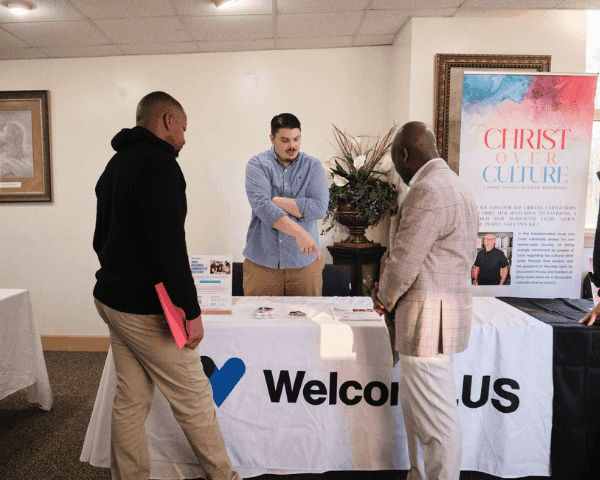
We’ve also been engaging in direct advocacy projects. We engaged with the Georgia State Capitol, and one of the greatest highlights is that we have formed a coalition of more than 50 people, a branch of the national group Faithful Witness Campaign.
Another thing we’re doing is co-creating a curriculum based on our president’s book, “Don’t Let Nobody Turn You Around.” It’s applying the principles of the Civil Rights Movement and how churches mobilized at that time, and applying it to the immigration issue.
We are also partnering with the movie “Brotherhood,” a cinematic musical about a white American man and a Mexican asylum-seeker whose worlds collide. They learn to become neighbors and step into each other's worlds, humanizing all of the different people who are part of the immigration movement. We’re doing a tour with them, and in our chapter cities we’re hosting the tour stops. At these stops, we’re going to include panel discussions on the immigration issue and share resources on how audience members can get involved.
You also produce two podcasts, “The Church Politics Podcast” and “Immigration with Holy Imagination.” How does that content engage audiences differently than your other initiatives?
Abrm: We try to be as true to our framework as possible, considering an issue from all sides rather than resorting to partisan talking points. There are times when our host and guest can’t find agreement on how policies should be implemented, but there is a foundation of common ground in shared values.
In these episodes, you hear the creative ways that Christians can land all over the political spectrum. We build on honesty, letting opinions live and breathe, letting others listen, and bringing in as many people as it takes to see all sides of an issue.
When choosing topics, we look at any major issues in our culture; there’s nothing we’re afraid to talk about. We need to continue to look inwards at how we present the issues and how we talk about them. Even if there are political figures who are very adamant about opposing them, we feel that, in line with our values, it’s important to highlight the truth.
It's listening and understanding, listening to God, listening to each other before taking action.
Krista: In our “Holy Imagination” podcast, we’re not necessarily discussing current events, but rather looking at the person we’re interviewing and humanizing them. We always ask, “What are the ways that people have misunderstood your community? What are the ways that you’ve responded to opposition with grace?” We don’t take a political perspective; we ask them to interpret for themselves what it would look like if Jesus were in charge of immigration policy. We also ask people what led them into the work that they’re doing, what challenges they’re facing, and what their greatest victories are.
We’re highlighting and platforming people as a whole. Not just their struggle, but also their victories. So often we hear about the struggles of immigrants, but that doesn’t paint the whole picture. Our goal for each episode is that people go from listening to understanding to taking action.
What is the best way for Welcomers to connect with and support your work?
Abrm: We have chapters across the country in many major cities, which we list online. They’re meant to be a space where people can take our framework and see it lived out in their communities, so connecting Welcomers to our chapters is a great partnership.
Welcomers can also engage with any of the tools that we create. We have a pastor’s political playbook for those trying to figure out how to lead congregations through civic engagement in a nonpartisan way. We have a civic engagement starter guide for people who may feel alone in their communities but want to build momentum in their cities.
We try to provide as many toolkits as necessary to equip people to engage their communities. Using these toolkits and joining the chapters are the best ways to engage with our work.
The more that we can highlight these spaces where people can slow down and get informed, the better. I think there’s a strong desire and need for this across the country, and we can expose it and get into those spaces as much as we can.
You can listen to our podcast, and we’re also on all social media channels.
More stories of welcome