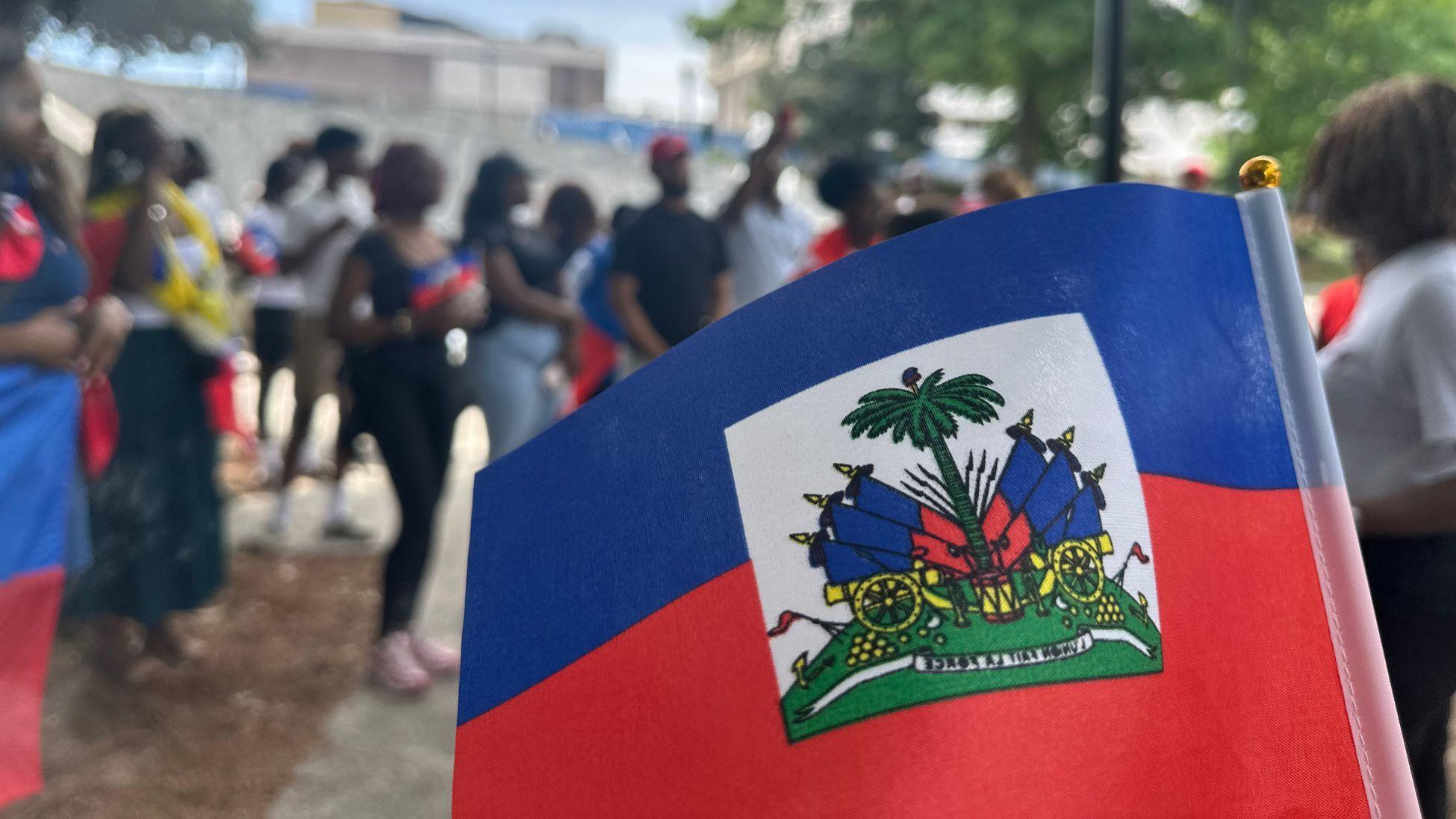
A Q&A with leaders of Good Samaritan Haitian Alliance Church
As Haitian newcomers navigate both the ongoing crisis in their home country and rapid policy changes impacting their status in the U.S., Good Samaritan Haitian Alliance Church remains a steady lifeline in Atlanta. Founded 30 years ago with a spiritual calling to serve the community, the church has evolved to meet the growing needs of newcomers and their families. We sat down with Watson Escarment, COO, and Mardochee Pardieu, associate pastor, to discuss how they are responding to current policy changes and what it really means to be a “Good Samaritan.”
Your church was founded 30 years ago to reach out to the world with the Gospel, and faith is central to your purpose in the community. Can you share how that faith shapes what you do as a church and congregation?
Mardochee: The church started when the community was very small. It took us a good 20 years before we had a sizable group that represented the community in Atlanta. I believe the Lord always has different circumstances and timing for us.
The moment of truth started for us in 2021 with the mass exit from Haiti after the assassination of our late president. That gave us this rapid and mass migration into the U.S. from people trying to find safety.
And then here we are, as our church is named, Good Samaritans, right in the middle of the work that the Lord has mandated us to do.
We're serving our own people and community, and those around us in Lawrenceville, Georgia, in every aspect of life. Immigration is a big issue, and integrating people into a new culture requires a lot of resources. And the Lord has been gracious, having people who share our values in terms of helping the hands of those in need.
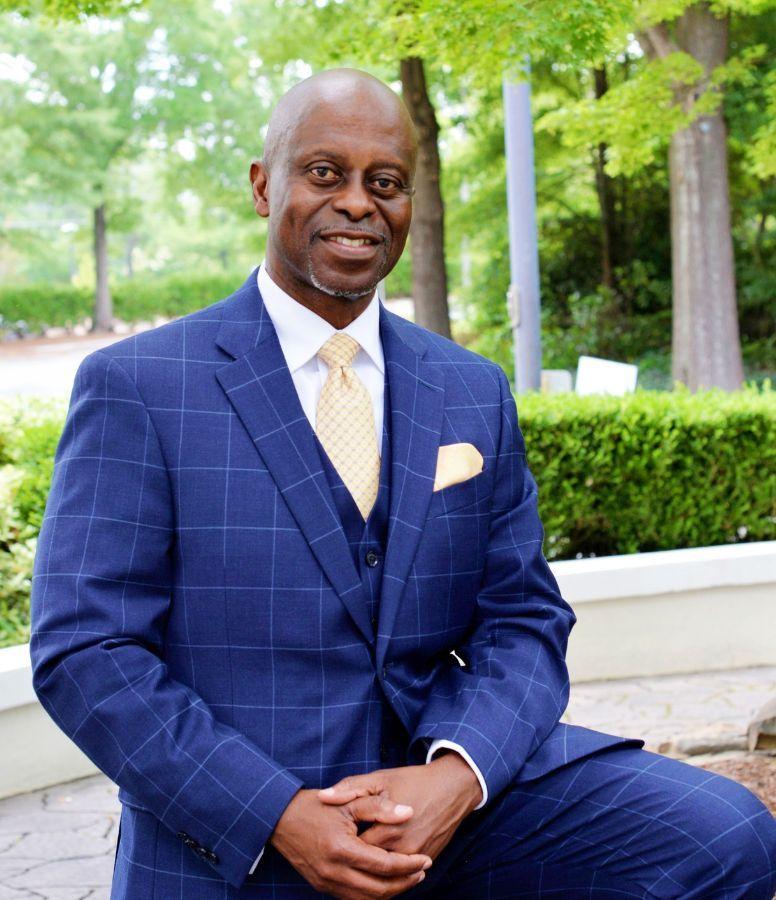
Watson: We've always prided ourselves on being a church that goes beyond our four walls and serves the community. In our founding, though, we didn't know what that really meant. We're a growing church as the Haitian community grows in metro Atlanta, so we wanted to be that beacon, that place where people can come.
What are some of the ways that the church has evolved to meet modern challenges, especially services like resettlement and housing instability?
Watson: I would love to say that we had some plan set up ahead of time, but we just had the desire to help. The need just came to us, and we fulfilled it.
We conducted an assessment of the immediate needs people had as they arrived. We were already doing it in our immediate community. Primarily, it was housing, food security, and job placement.
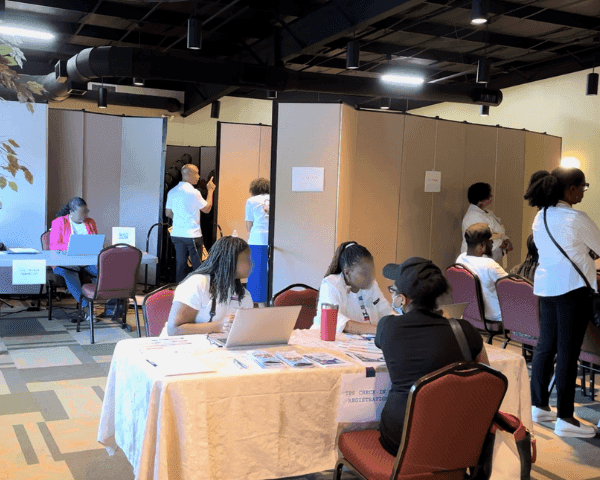
Others like myself may take for granted what we do in our everyday lives and in our families' lives—things we don't even think about, but we naturally do. Like driving, for example, we just learn to drive as teenagers, get behind the wheel, and drive. A lot of those individuals have never been behind the wheel of a car, so we had to start offering driving classes.
There are things like enrolling your kids in school that we take for granted. How do you do that? How do you navigate society in a different country? We started offering English classes, teaching individuals how to navigate society. It was common everyday language. We would put ourselves in their shoes and, based on their feedback, revise and navigate the everyday things we may take for granted, but they simply didn't know how to do.
As Haitian immigrants, how does your lived experience inform the work that you do with your congregation in Atlanta and beyond?
Watson: As a child, I came to the U.S. My parents were already living here, so I was fortunate to have that, but many were not as fortunate as I was. My parents had already migrated from Haiti a few years before, and so I landed in a spot where it was nurturing. My parents did as much as they could to make me feel loved [and provided for].
I also saw that the need was still unfulfilled with others around me. So, to me, that became a natural inclination of being born into that work, coming from a place where there was not a lot. I saw the disparity between that place and the new place where I settled.
And what it looked like for me, it was rejection at first. I never wanna go back to that place. I never wanted to be associated with that aspect of [Haiti]. Then I realized God started speaking to me and equipping me to help others. What I saw around me, though, was that light began to shine brighter for me, and that calling, that urge, and that push became stronger and stronger. It started when I went back to Haiti and helped others there. Then I said, “Okay, well, when the need comes to you, you don't have to go to the need. The need is right here at home. How do you do that?” That became a natural calling for me to help those get settled and do the things we just talked about.
Mardochee: One of the things that continues to motivate me in what we do to help those who come from Haiti is that I do not take the privileges the Lord has given us in this country for granted. Now, having gone to college here and done undergraduate and graduate education, I don't take it for granted.
Automatically, it becomes a give-back-type model for me. I have to give back what the Lord is giving me in terms of education to those who are new to the country and to those in Haiti who need that level of education.
You are a recent Welcome Fund grantee. What opportunity does that grant provide for you?
Watson: The grant is a great opportunity to tell our story in a bigger way than we could before, in a more appealing way that people can grasp. We plan to film a mini-documentary to tell our story.
We're planning to interview individuals who've gone through some of the things we're talking about, have received the aid the church has provided, and what that meant to them. We also want to talk about their journey from Haiti to the U.S.
[It’s also important] to tell a story that includes hope, opportunity, and inspiration. We want to show the people who have come here and found success to the greatest extent possible. They’re business owners now, those who have found legal pathways to do that, and we want to be able to tell that story as well.
We want to paint a picture of this hardship, this journey to get us here, and also show the country that welcomed us. This is the potential that the grant makes possible.
What is motivating you and giving you hope in your work right now? What are some of the actions that you're taking in your greater community to support what the future of Temporary Protected Status (TPS) could look like for Haitians?
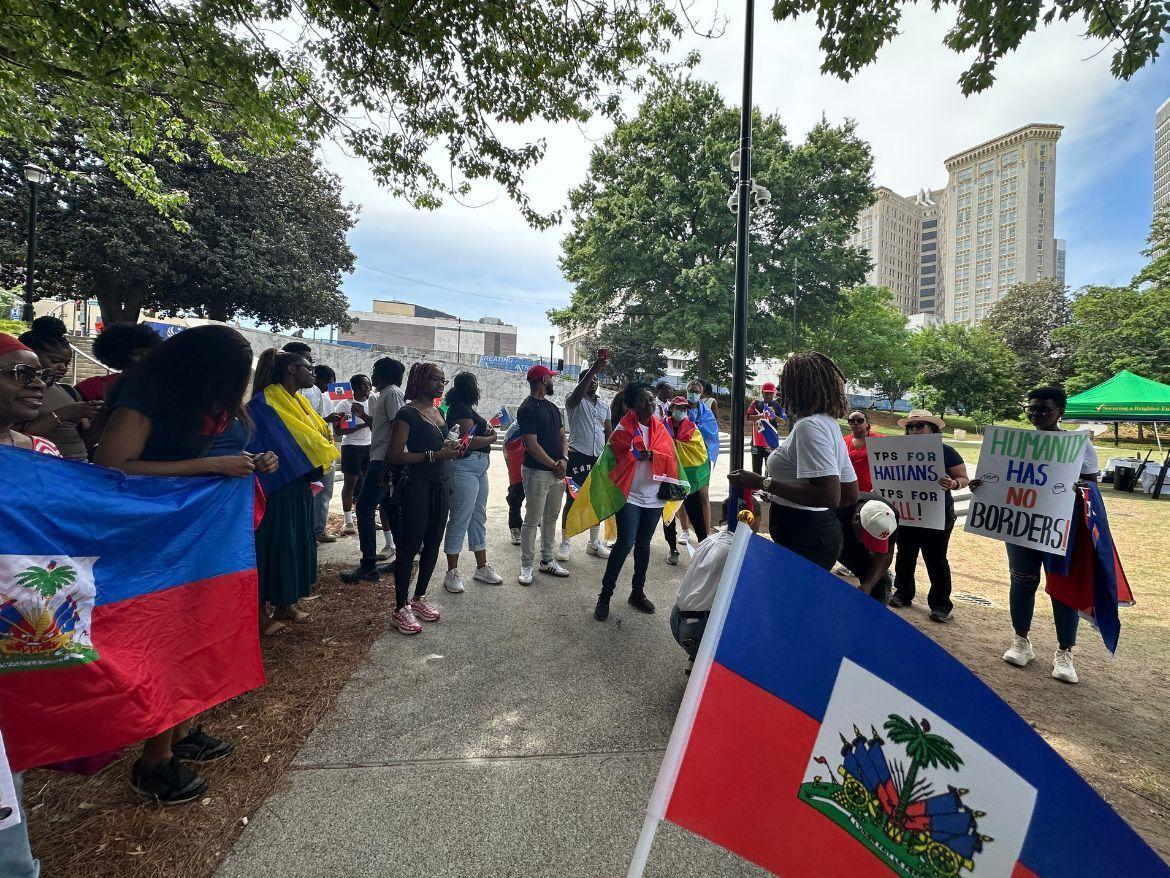
Mardochee: Our partnerships are essential in this time. [This helps us provide] seminars for families to give us a better perspective on how we need to respond to the challenges of the time. When families come, they feel empowered and informed about where things are going. We do hope that the Supreme Court will decide in our favor… But I'm already one step ahead of the outcomes.
The [policy] decisions may not be in our favor, and we need to position ourselves beyond the possibility of termination so that our people do not need to leave.
We continue to think about the “dooms day” possibility. How do Haitians go back to restart their lives in the country they fled? All these things continue to be part of our thinking and planning. We don't want to be at the mercy of different administrations. One comes with something to our favor; one comes against it. And this is an opportunity for us to at least have some control over our destiny.
Watson: How do we empower those who are here and those who have been here with a legal pathway? For instance, I know there are different doors that may close off legal opportunities, whether it's TPS or others. And there may be other pathways, such as employer-sponsored programs.
These families are here, kids are here. They're starting to be integrated into schools, and some individuals in this TPS program have been here for many years. And now to uproot those individuals and say, well, just go back to a place that you don't even know… that in itself is disheartening to even think about.

But still, we have to move forward. We have to be the light that shows opportunities where there may not be an obvious opportunity.
What is a key takeaway you’d like to share with our audience?
Watson: I want to ground everybody on the human aspect of what's going on. We're all different; we come from different places, ethnic backgrounds, and on the surface, everyone seems different. Not even from a Christian perspective, but from a human perspective—we are all human beings, men and women of this earth.
I want to ground everybody on that in terms of human decency and what it calls for. We're not talking about criminals. We're not talking about people who have come here to violate laws, but people who are fleeing persecution, who are fleeing a place where they're being hunted.
From that human perspective alone, through that lens, what is the right thing to do? What isn’t the right thing to do? Is it to just turn a blind eye and say, “Well, we don't care about that.” As we become a more global society, more connected than ever, we're more assimilated than ever. What does human decency say about each of us in looking out for one another and our neighbors?
Being neighborly, being human to one another, that transcends skin color and boundaries and ethnicity and religion—it transcends all of that.
What is the best way for somebody from our Welcomer community to support your work, whether they're in Atlanta or elsewhere?
Watson: The way that people can support us is to first educate themselves.
Don't just take what's being talked about in the media and the news—first educate yourself. Get to know a neighbor, and support something that's happening around these types of causes in your local community.
We can make a big impact through collaboration, through national impact. Let's mobilize each other. Come up with collaborative strategies for coming together. It could be a yearly event that we have one time and for a day or two mobilize each other, and then everyone can go back to their respective areas and feel more empowered, but more specifically, have concrete steps and items that we can all come up with together that support one another.
Mardochee: I think Haitians are natural neighbors to Americans. We are not too far from south Florida, so how do you treat your neighbors? We can start there. Not only for those of us who are here, but also Haitians in Haiti. Once we can answer that question, there are many ways you can help your neighbors in need.
More stories of welcome