A Q&A with Laurie Wanta of The Welcome Network
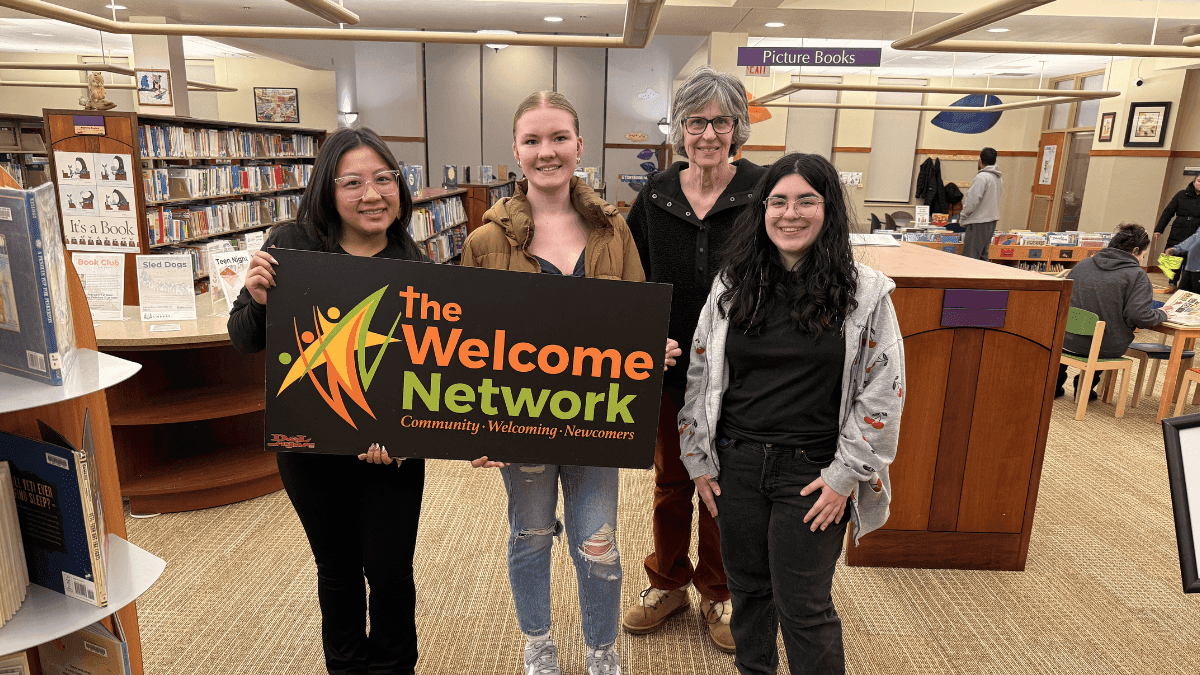
In the small town of West Bend, Wisconsin, The Welcome Network helps immigrants feel at home. Rooted in Christian principles, the organization draws on a relational model to build long-lasting friendships and foster active community participation. We sat down with Laurie Wanta, Executive Director of The Welcome Network, to learn how this approach helps newcomers move beyond mere survival to live abundant lives.
You have a very unique thread of experiences that led you to the Welcome Network. What was that path like?
I'm a follower of Jesus, and I lead with my faith. That's why it's in our mission statement; it's honestly the inspiration. I find that welcoming others isn't always our first instinct. There needs to be something that sparks this passion in us that may be outside ourselves.
The whole of the Bible is pretty clear about welcoming the outsider. They would call it the foreigner, but it’s the outside person, the newcomer. So it's godly behavior, but it's also wisdom. This has been informing me my whole life.

And I just said, ‘We have to do something.’ There was this sort of question: What can we do?
We formed a relationship with Lutheran Social Services, which was a deep dive into refugees and resettlement. Over the last 40 years, there has been a tradition of churches welcoming families; it was a model for us. We could see in practice how churches could participate by acting as a unit to welcome.
I also saw the struggle of those who came here and didn’t have a support system, and for those who even did have a team of people helping them resettle, what happens when they can no longer provide support? I wanted to figure out what that ongoing support could be in our area.
I really felt a call from God. I didn't know what I was supposed to do. I just realized I had to go to people and say, I think we're supposed to do something.
Can you talk a little bit about that support system, that community, and why West Bend is really the right place for the Welcome Network?
I really think any place is the right place. It's the people who care about where they live, and they care about their environment and their own communities, and they also know their own community. I can’t welcome people to Milwaukee, I don’t live there. But we can help refugees as a local effort, and that could be the same for anywhere.
The people who know the place of settlement must be the Welcomers; they have intrinsic knowledge of the specific culture and the services offered. They have connections and relationships that can be transferred to the newcomer over time.
West Bend has really rich offerings for families. We have nature programs, sports teams, parks, libraries, museums, and outdoor events. But if you're from another place, you don't know where to look for those things.
So when we first talk to newcomers, they believe that they've seen everything because they've been here a while. That's not true. We must open it up to them and show that there are many more opportunities here, enabling them to not just survive but to thrive and experience an abundant life.
There are basic needs, but there's so much more to life, and we want to help them engage in that. We have a relational model of operation, being known and knowing. We want them to know us, but we want to know them just as much.
What does that relational engagement look like in practice when you are working with a family in the West Bend area?
Most of our families come to us through the school district. They also created a multilingual family department that aligned with the Welcome Network to coordinate efforts to help families. Through our website, someone tells us what they need, and from there, we contact them and figure out how to meet.
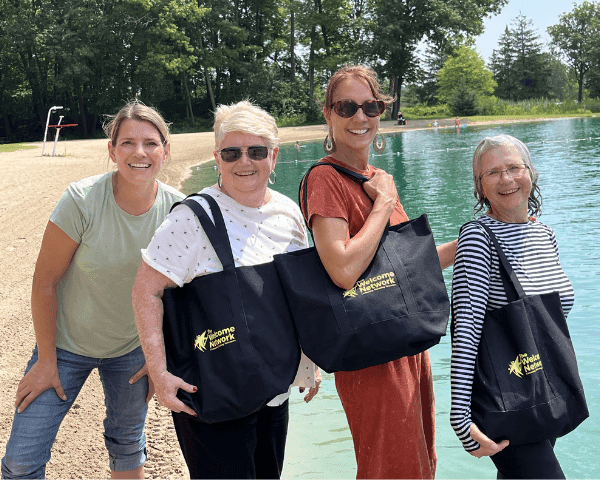
What we like to do first is a welcome visit. We want them to feel welcome and to see that there are people here ready to welcome them. We want them to feel blessed, we give them a tote with all sorts of things that they could need.
For example, we’ll bring some team apparel from our local high schools. The high school sports are a big deal in our area, and having some merch from the schools can bring these families a piece of recognition as being part of the community. We bring a set of metal measuring cups because our area is known for the development of pots and pans, and a beach towel to bring to the local lakes in the summertime. We’ll also provide a binder with clinics and services to make sure they know what’s available.
First, we tell them we're there in the name of Jesus. Even if they're not Christians, they understand a faith response to helping others. We have no political or social agenda, we just want them to understand our call to help.
We say very intentionally, we are glad you're here. They might not have ever been told that. We acknowledge that West Bend is likely very different from where they’re from. And we often have a laugh about that, letting them explain what they’ve observed. We want to share with them the good things about our town, the things that can make life wonderful.
We also have a community garden plot. One family had been farmers in their youth, and their family grew up that way. They miss certain types of vegetables that are hard to buy. So we invited them to come along to help us with the first digging out of the garden. That was an activity we did together, and that broke that barrier.
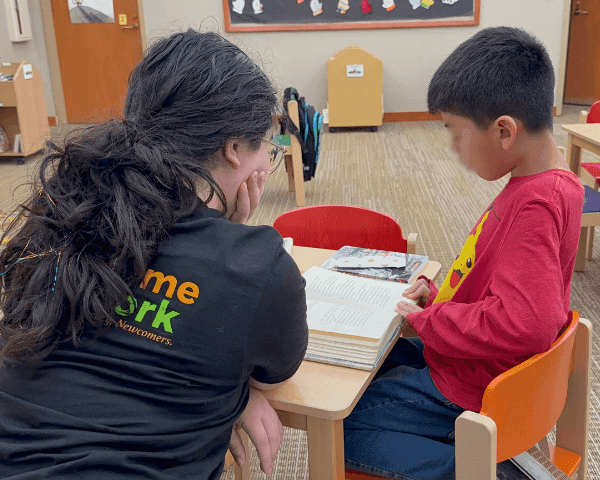
They don't come to an office to find us; we are typically in their homes, in their cars, out and about in the community. So that is how it looks in practice, how it becomes more relational over time.
We call ourselves a network specifically because we want to continue to connect more people to welcome; we have a whole web of individuals who can support.
What's a misconception that people have about welcoming refugee and newcomer families in your area?
I think a big one is that people think that you have to speak their language to understand them. I love learning languages, and I would have loved to learn every language spoken by the people we welcome, but I know that's just not possible.
Then God just said to me, "You're going to have to sacrifice that love and be their English speaker.” You have to give them your English because they don't engage with English speakers very often. Interactions in English may be over the counter or through a screen, but that’s not real communication.
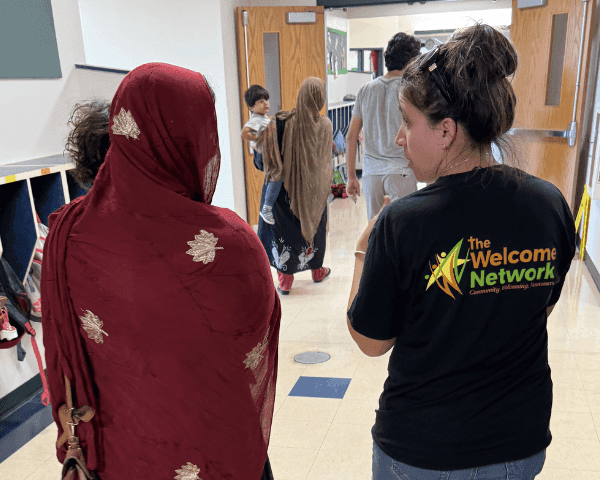
We work regularly with people from about seven language groups. That's a lot of languages in one community. People are shocked that there are 20 languages in our school. I don't know all these languages, I'm even discovering new names for languages. I may not be able to speak their language, but I can communicate with all of them.
There are so many incredible translation tools out there now, but we want people to speak English with the families they work with as much as possible. If we translate everything for a family, we’re giving them a false impression of the world. To move forward in their journey into an abundant life, not just survival, we have to help them with their English skills.
To know them is to know us; knowing is the goal, and building meaningful relationships is the goal, and that never ends.
You recently received a Welcome Fund grant! How will this funding allow you to scale your operations in West Bend?
The grant has already been a huge help. We decided to revise the Welcome Totes by redesigning the content and information packets. Each tote costs around $200, so that’s a lot of what the grant is going toward.
We’re also using the grant to support our media posts. We aren’t using them to ask people to welcome, but more to get them to think about welcoming. We have to stand firm in what we know is true and keep speaking in that way. Part of our mission is to keep people thinking about welcoming, even if they don’t take the action.
If someone is hearing about The Welcome Network for the first time, what is the best way for them to support your efforts today?
If someone's local, we would love for them to come forward. We hold cultural sensitivity training sessions, offer ongoing volunteer opportunities, and are looking for people to serve on our board. For those who aren’t local, donating is great. For a nonprofit simply to exist requires funding. And we need to exist. We have gained a lot of trust in our community, and just our name gives us entry to resources and services.
Our funding goes to things like insurance or the Welcome Totes. As we await a new season of welcoming refugees, we are preparing by purchasing a duplex. The goal is to offer newcomers temporary housing more efficiently and provide a safe landing.
The final thing, which is actually the first and most important thing, is to pray. We pray in the name of Jesus that we will be able to welcome again, and that people sustaining the spirit of welcome will open their arms when the time comes. It’s what we’ve been doing in the U.S. for a long time, and what we should continue to do.
More stories of welcome
Stories of Welcome
'If every church could sponsor just one person… what a difference it could make.'
September 03, 2024
Stories of Welcome
A mutual benefit: Welcome Neighbor STL supports newcomers in St. Louis
April 24, 2025