A Q&A with Eric Costanzo and Lisa Tresch of Rising Village
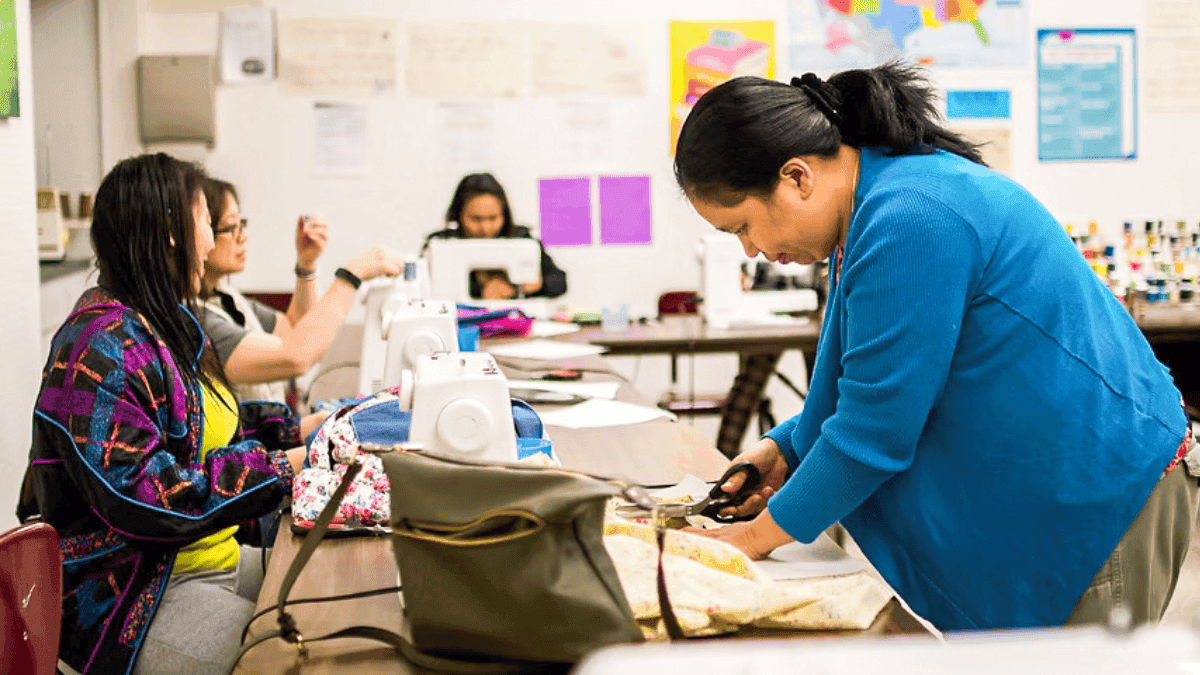
Based in Tulsa, Oklahoma, the Rising Village Foundation provides support to the refugee and immigrant populations who now call Tulsa home. Programs such as ESL classes, Conversation Cafes, and the RiSE Sewing enterprise empower refugees and immigrants as they build stability, form connections, and develop new skills. Welcome.US spoke with Eric Costanzo, Executive Director of Rising Village, and Lisa Tresch, Founder, to learn more about their programs and community impact.
Your mission at Rising Village is to help marginalized individuals become full participants and contributors in their community. How does this guide your work in Tulsa?
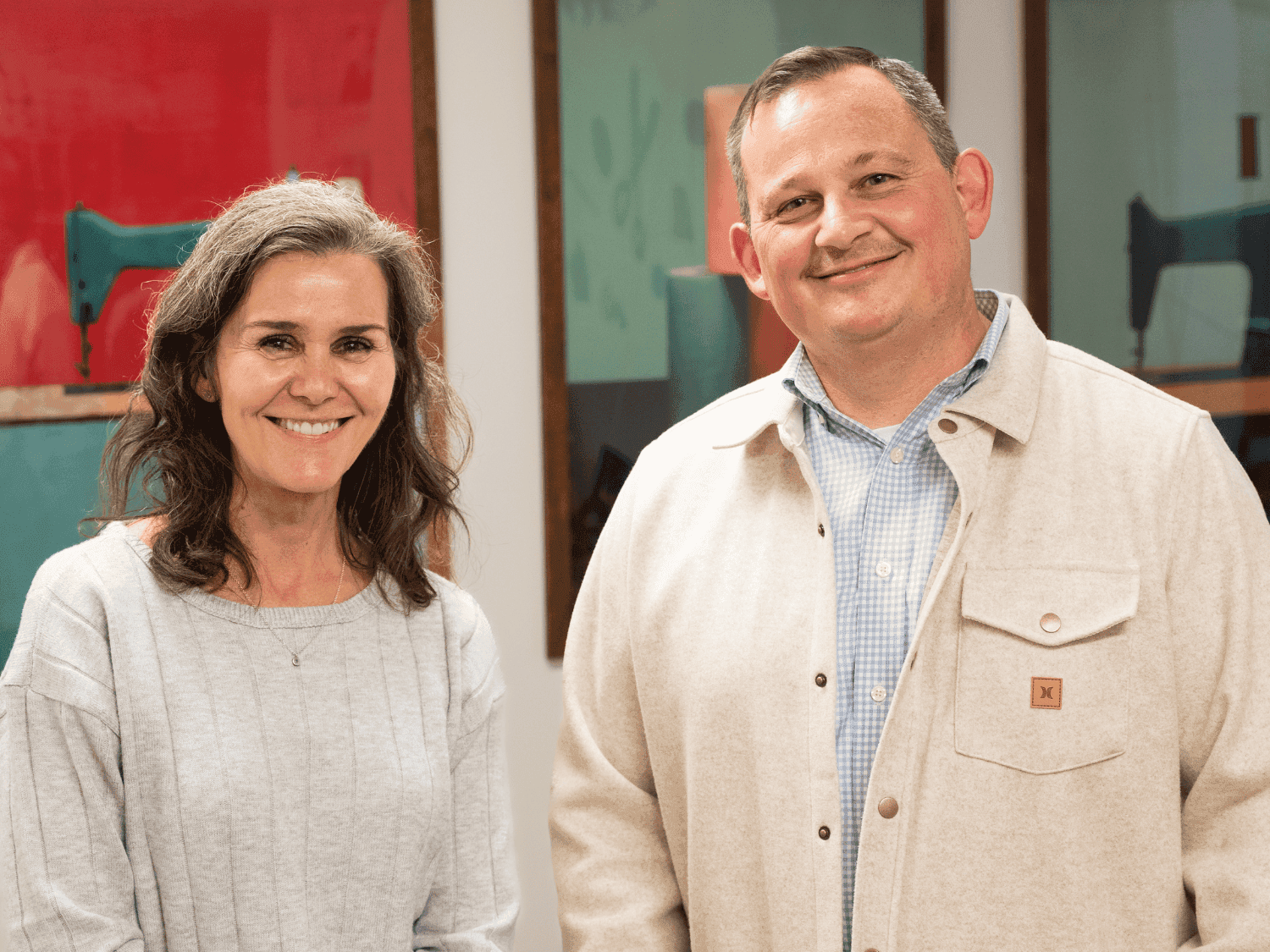
Eric: We focus primarily on the immigrant refugee population. We look for our programming and all of our opportunities with staff and volunteers to bring people closer through relationships, and then help them understand how interpersonal interactions can also improve their community interactions.
We also have opportunities to do more practical things. It's a holistic approach, but the personal nature of it makes it more successful in the way we do it.
Lisa: Another thing to emphasize is that we establish trust.

Establishing trust is a priority, and making sure they know we want to welcome them in every way we can.
What drew you to working at Rising Village?
Lisa: I founded Rising Village in 2012 after taking a trip to Ghana, West Africa, and was working with some children who were orphaned. After meeting the children, I realized that although they are at an orphanage, they are often not orphans; they have single mothers whose circumstances lead them in and out of orphanages.
This made me realize we need to start with the moms. We need to start by empowering them within their community to earn money so that they can feed their kids. We started a program that supported women in completing seamstress and hairstyling apprenticeships so they could open their small businesses after three years. After some time, we turned the program over to our staff in Ghana, but our nonprofit's mission stayed with us.
We looked into ways we could fulfill a similar mission in the U.S., which led us to see the need among refugee women in our community.
From ESL instruction to prenatal education to other workshops you hold, your programs have an incredible impact on those you serve. How do these initiatives help promote empowerment and integration into your community?
Eric: We offer on-site English classes for our families, but many of our programs are also interconnected. There may be families in our ESL classes who are also part of the sewing programs or the Conversation Cafe. There are also families that are only in one of our many offerings.
Between all of this, we try to keep the same mission there. We’re building trust and relationships, and until January of 2025, we were also a resettlement agency. When we were resettling immigrants, those classes and programs were working with new arrivals within their first 90 days.
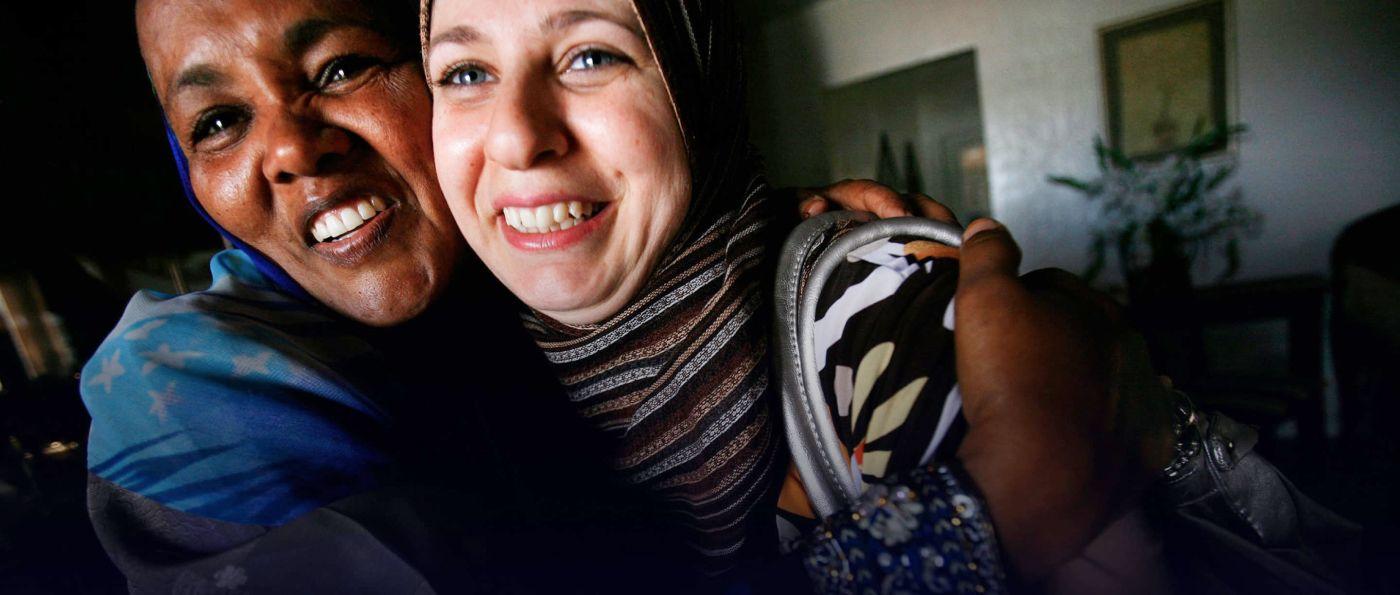
We've always told all of our families, if you come through Rising Village, you're our family forever.
We’ve been adapting what we offer to accommodate these people who aren’t new arrivals. For about two years, we've been running our Healthy Moms Rising class, a prenatal program for women. These initiatives can connect the people in our community through our mission.
You have both ESL instruction and Conversation Cafes. How are these programs interconnected to support your clients' English learning?
Eric: Our ESL program is big, with 12 classes, and we invite everyone in that program to the Conversation Cafe as an extra opportunity to practice their English and make friends.
ESL is a traditional program in a classroom setting with a teacher, but the Conversation Cafes are totally different. They’re volunteer led, and it’s more casual. It’s an hour-and-a-half event with a set conversation topic for the night and discussion questions.
We keep the topics simple enough that people at all levels of English proficiency can participate, and then we finish with a game to keep the night fun. This program really helps build friendships while learning.
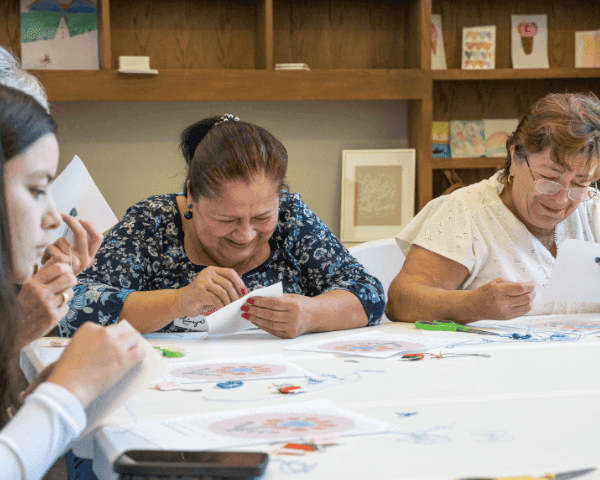
Lisa: In addition to that, it gives people a safe place where they can ask questions about everyday life.
When we set up this program, we really were thinking of what it looks like to be a cultural companion, to really walk alongside somebody and not assume that they know all the answers, but to encourage asking questions in a safe and inviting space.
Eric: And the Conversation Cafe does give people a place to talk about serious things. It's more than just small talk. Somebody will all of a sudden drop something on the group, and everybody goes, “Yeah, we feel that.” And we've seen Conversation Cafe evolve from its initial vision into a more involved community—American born and non-American born—tackling tough topics.
We've mentioned the sewing programs, and that connects with the RiSE shop. Can you share more about how these skill-building income opportunities connect with economic empowerment for these families?
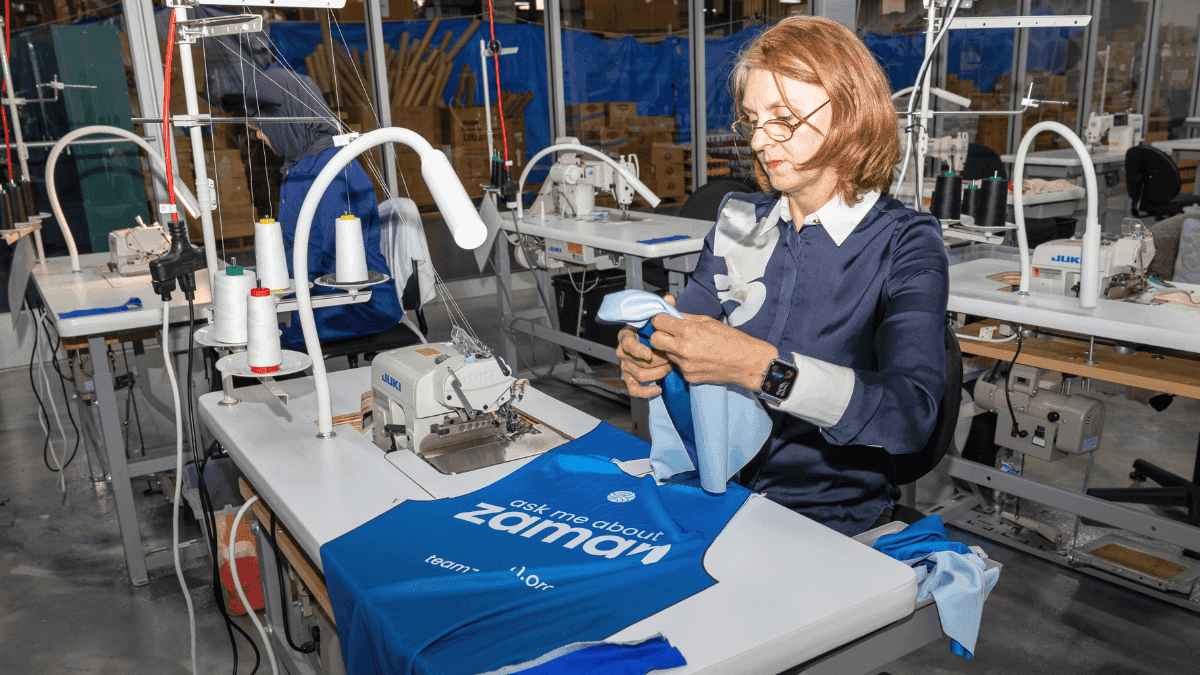
Lisa: When we started the program here in the U.S., it was always an intention to identify those women who wanted to earn money for their families. We had our sewing program that started as a beginner class, and then they could move up to more intermediate and advanced levels.
In those groups, some women’s primary interest was learning to sew as a hobby, but there was always a significant group looking to start earning some income. The task for us then was figuring out how to provide this opportunity for them. So we started introducing classes that taught them how to make items that would sell.
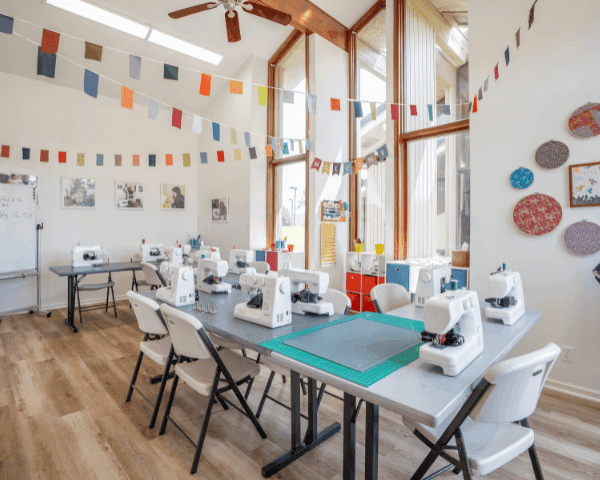
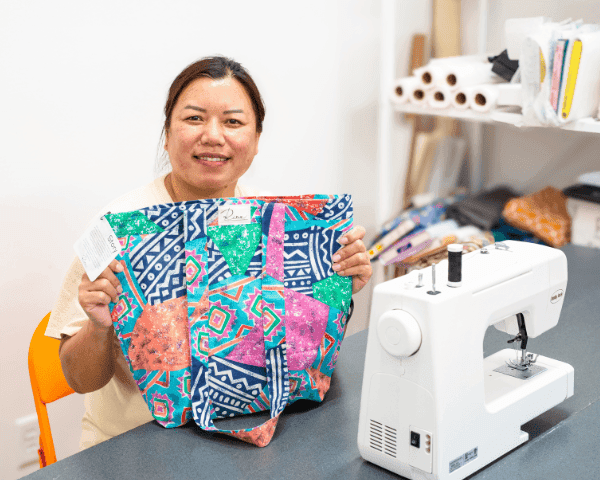
We want these women to learn to make products that are even better than what you can find in the average shop, because they’re actually homemade and of good quality. But before they get to that point, we work to ensure that they have the skills that they need. When we sell these products, we want to tell the story of these women. What we’re doing, what they’re doing, and why we’re doing it to elevate and empower them.
Eric: It’s essential to add that some of the women do the beginning sewing class but don’t have an interest in going forward with it. They join, make friends, and learn how to make useful items for their families, like pajamas. At the end of the beginner class, everyone receives a new sewing machine as part of their graduation. The goal can also be as simple as finding a connection and learning a new skill that adds value.
Advocacy is an integral part of what you do at Rising Village. What advocacy efforts are your priority right now?
Eric: We started working closely with the refugee population in 2016 and 2017, and we formed a partnership with World Relief.
In 2018, the Trump administration gave states the power to decide whether to welcome refugees. So we wrote letters to our governor, Kevin Sitt—hundreds of thank you letters from refugees in Tulsa, sharing from both our and their perspectives on why admitting refugees is essential, and asking to let Oklahoma continue to admit them. And it worked. It was a clear example of our advocacy making an impact.
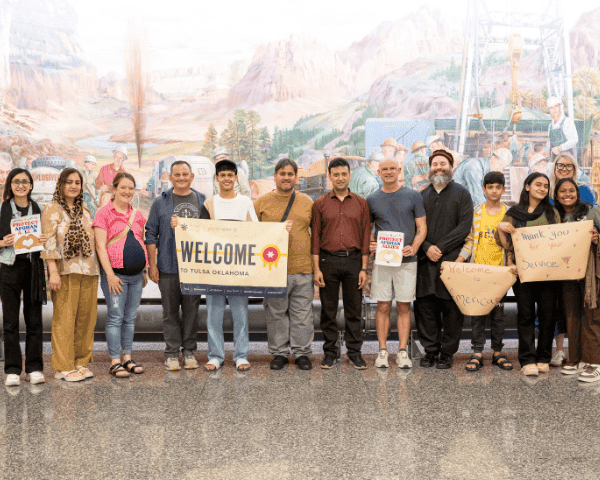
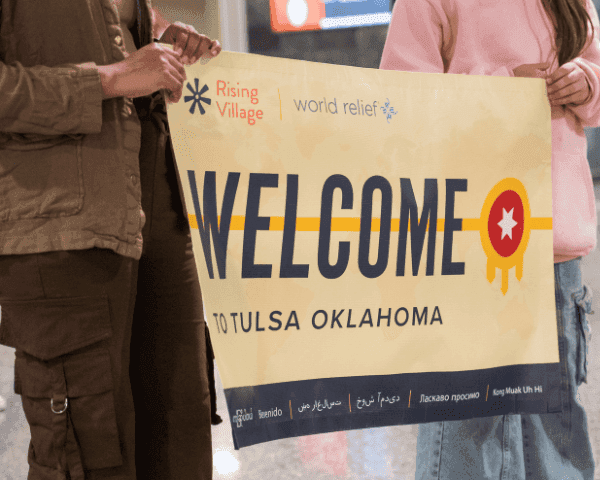
It was a long journey that started in D.C. with just a few people at the national level, but has since grown into a large local movement in Tulsa.
Now, we’re still doing advocacy to whatever extent that we can, but it’s hard. We’re making a big focus on telling the families and individuals we serve to tell their stories. We’re looking for ways to share their stories locally to make an impact.
Lisa: Today, there seems to be so many more conversations going on around immigration, and yet we have to work so much harder.
We know we need to educate people on why it's a good thing to have immigrants in our communities rather than letting them fear that. I’m incredibly passionate about telling those stories to show what immigrants can bring to our community.
You recently received a grant from the Welcome Fund. What does that opportunity mean for your work and the impact that you can make?
Eric: A big pivot that we’re planning is to focus on storytelling more, and creating outlets to tell the stories of these families. We’re also partnering with the National Association of Evangelicals, and we’re really looking to scale what we’re doing locally to a national level.
By scaling out our storytelling efforts, we can contribute more to the advocacy work that we’ve started. We’re really looking to politicians who may operate more on the Republican side, but, from a place of compassion, can advocate for these legal pathways that still exist.
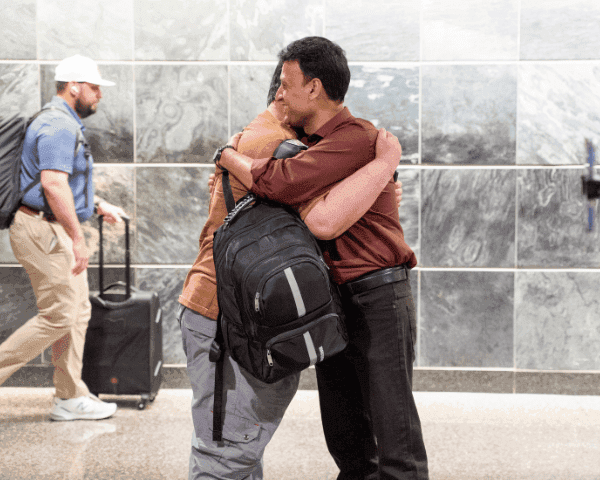
We have some bold and courageous families who are willing to tell their story, and we want to help them tell it and advocate for them.
It takes funds to really host these on-the-ground forums and have these conversations, and this grant opportunity can really make a difference in that work.
What can our welcomers do to support your mission and work?
Lisa: Right now, a big focus is on our sewing program. By visiting our website and buying a product, you can support these women and know you’re getting a quality item that goes to a good cause.
More than that, just visit our website and learn more about us. We are always looking to hear from more welcoming voices and are excited to work with anyone who wants to be a good neighbor. We are always looking for ways to make Tulsa a more welcoming community, so by having conversations with people from all over, we can learn more about how that looks in their community and how they see being a good neighbor.
We’re passionate about what we’re doing, and we want other people to be passionate about that in their own communities. At the end of the day, being involved is so important. Look for ways to get involved in your community to support immigrants and refugees.
More stories of welcome