A Q&A with Monica Boomer of Zaman International
For nearly 30 years, Zaman International has empowered women to break the intergenerational cycle of poverty and create a stable life for their family. Based in Detroit, Zaman has evolved from a grassroots initiative into a multifaceted nonprofit that provides essential services such as basic needs assistance, education, workforce training, and healthcare. They also support related causes worldwide. Welcome.US connected with Monica Boomer, Chief Impact Officer at Zaman International, to dive into the Zaman client journey “from crisis to stability to sustainability.”
Can you share what inspired Zaman’s mission and how it has evolved as the organization has grown?
Zaman really began with the story of a refugee family. Back in 1996, our founder, Najah [Bazzy], was working as a transcultural nurse for a local hospital.
As a transcultural nurse, her specialty was being the liaison between the Iraqi refugee community that was starting to arrive around that time from the Gulf War and the hospital system. She took on [the] case of a young Iraqi couple. Shortly after they arrived in the U.S., the mother had twins: one was unfortunately stillborn, and the other twin was born with what the doctors deemed severe anomalies incompatible with life. In other words, they knew that it was a case of futility.
The head physician of the case decided that his plan of action was to have the family end all life support and let the child pass away. Having just arrived as refugees, having lost most of their family during the war, going through the trauma of losing their first child, and the cultural and religious concerns surrounding that action, it was not a decision that the family could make.
So our founder, Najah, called together the ethics committee in the hospital, and they agreed to do something that is very rarely done, which was to make the infant a hospice case.
The infant was on life support when they went home [and] part of the agreement was that Najah would serve as their liaison with the hospital at that point. Shortly after the transfer was made, Najah went to visit the home, and as she walked in, her immediate thought was, “Oh, they must be either moving in or moving out,’ because as she stood in the front door, she saw nothing in the home except one rug on the floor.
She came to find out that no, they weren't in the process of moving; this was the entirety of their possessions. Instead of a crib, they were using a laundry basket. With no fridge, they were using a styrofoam cooler for baby formula. They were using all of the resources that they had to support their family with as much dignity as they could afford.
Being struck by their condition, she went to her community, knowing that they had to show up for this family. By the end of that week, they had put together not only cash assistance but also access to a vehicle, as well as all the home comforts they could need to support their baby.
Their child did end up passing away shortly after, but that baby's short time here on earth is what led to everything that Zaman is doing now. That's why we're called Zaman: Zaman is a word in Arabic, Hebrew, and many other languages, meaning “time.”
It makes us think to ourselves, “What are we doing with our time—no matter how long or how short it is here on earth—to be good stewards for our neighbor?”
For the first decade following that story, it was an extremely grassroots effort. We became a nonprofit in 2005-2006, marking a concerted effort to focus on our mission. We identified a gap in services within our community, particularly affecting women and their children, including single mothers.

They saw firsthand that when a mom falls into that type of situation, an entire generation falls behind her.
We have always retained a pathway for refugees in our services in honoring the first family. Our mission is to break the intergenerational cycle of poverty through a multifaceted approach: providing basic needs assistance, workforce development, and education for mothers, and, most recently, on-site health services.
What are some of the factors or issues that impact the women and children you serve today?
The clients we serve have come to us for a variety of reasons. It could be a result of domestic violence. It could be that they've been widowed, that they've been neglected or or abandoned. We've seen just about everything come through our doors. One of the things that disproportionately affects our clients is that the systems often fail to accommodate individuals with child care issues, transportation issues, or language barriers, which we frequently encounter in our cases.
Detroit is the Motor City, but as a result, it was not built with public transit in mind. So that is a consistent problem for any organization in southeast Michigan. Not only do we lack public transit, but we also have some of the highest rates of auto insurance in the country. So getting a car, a safe car that's affordable and insurable, is not always feasible.
We've also seen a lack of confidence [in clients] that's been a result of having door after door slammed in their face.
The magic that happens when a classroom of women comes together and inspires each other, whether they realize it or not, is truly spectacular.
The transformation and change in mindset we see is remarkable. Whereas they came in just to acquire a hobby, they're now leaving with their foot in the door for either a job outside the home or an entrepreneurial undertaking that they want to start in their home.
What does the Zaman client journey look like when they arrive in crisis and aim to achieve long-term stability?
More often than not, when families come in, they're in some sort of crisis. It could be a long-standing crisis that has finally pushed mom to her breaking point. It could be something as sudden as a house fire or a flood.
Their first stop is with our client services department. We pride ourselves on not being a one-size-fits-all model; our caseworkers take the time to sit down with every person. We understand not only the challenges that they're facing, but also what they're bringing to the table in terms of skills, interests, and hopes for the future, so that they can build a strengths-based approach for every client that comes in.
For some clients, all they'll ever need from us is a monthly visit to our food pantry. Others are ready to make a lasting change. They aim to establish stability in meeting their basic needs, then progress through our other programs to become self-sustaining.
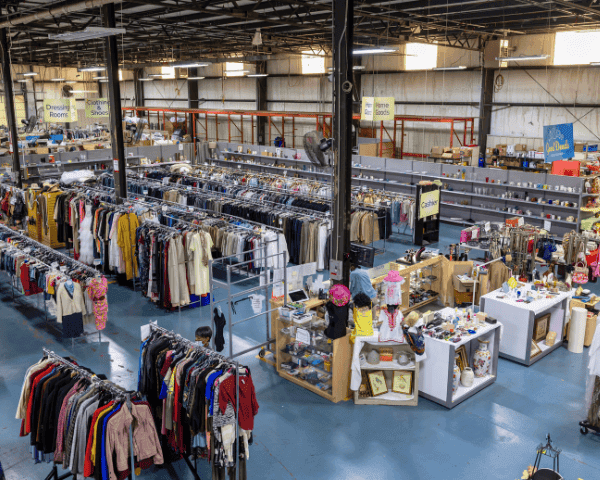
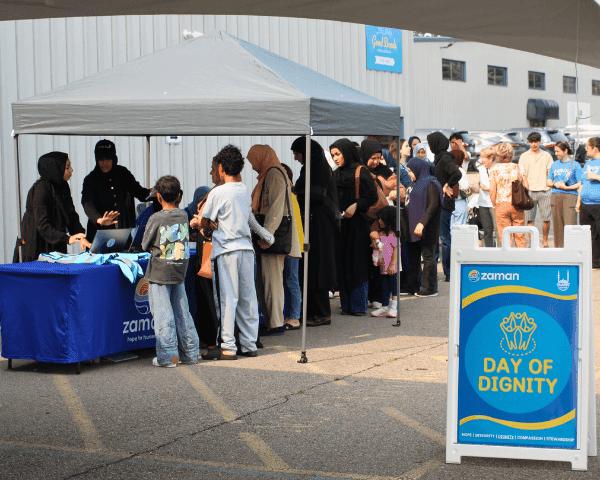
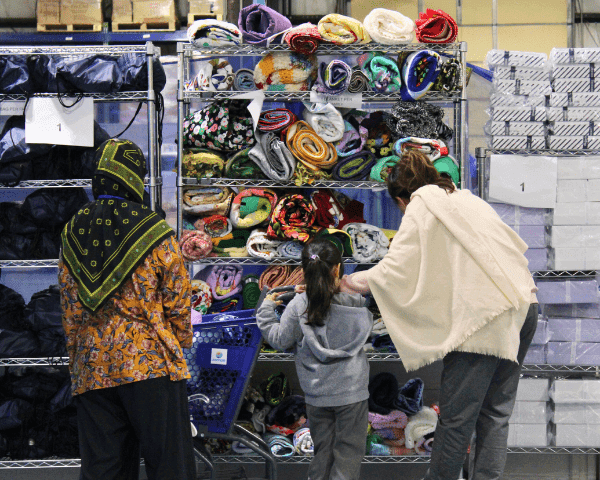
Our client services department meets basic needs. Every quarter, clients receive a voucher to shop in our clothing store so they can choose the items that are right for their family. They can also participate in both classes and services offered by our health clinic to reach a point where they're no longer worried about their next meal, allowing them to focus on the bigger picture.
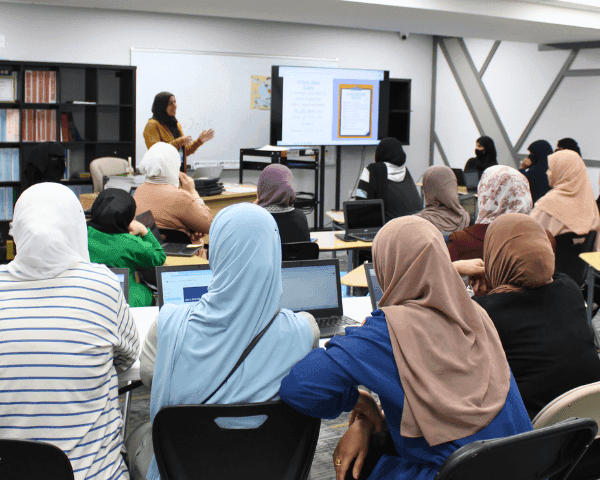
From there, mom can enroll in our education programs. These include ESL classes, garment sewing, industrial sewing, and the culinary arts. Oftentimes, if it is a refugee or immigrant client, they will co-enroll in both ESL and the vocation of their choice.
They go through those programs, which can last anywhere from a few months to a few years, depending on their starting point and desired completion point. Then, at the end of their training, they have the opportunity to stay on with Zaman for on-the-job training and in-house employment. We can also work with them through our career navigator to find placements outside of Zaman, helping them begin their journey in the workforce. This process, spanning from intake to sustainability, can take multiple years, but it provides them with the confidence they need to enter the workforce.
Do you have any stories that you hold close—clients or families who have been on that journey and gotten to the right place for their future?
We have one family of refugees that came in 2013. They initially came as a referral from a resettlement agency, and they needed their basic needs taken care of. Zaman has a halal facility, making us one of the first referrals local agencies often make, especially for individuals from countries like Syria and Afghanistan.
They came initially asking for food assistance, and then we came to find out that at home they also had two daughters with special needs, and we understood that was taking a toll on the family as well. We were able to refer dad to a more stable and better paying job. And once that was squared away, mom came back and did ESL with us, as well as garment sewing.
The main output we observed from this case was not her decision to enter the workforce, as not everyone in our program makes that choice. But our programs led to mom's confidence growing, and she started raising her daughters to dream big and to set their sights higher than the family had assumed they could achieve, given their medical challenges.
The two girls ended up entering college. One graduated in May as an engineer, and the other is nearing graduation to become a pharmacy technician. If there's one thing that we've learned, it's that everything is on its own timeline. Twelve years later, we're seeing a generational shift in the family.
Can you share more about what clients experience in your workforce development program?
One thing we often heard before starting the workforce piece of our work was that we can’t just provide hard skills. Instead, the clients we work with need a transition period to pick up some soft skills for employment.
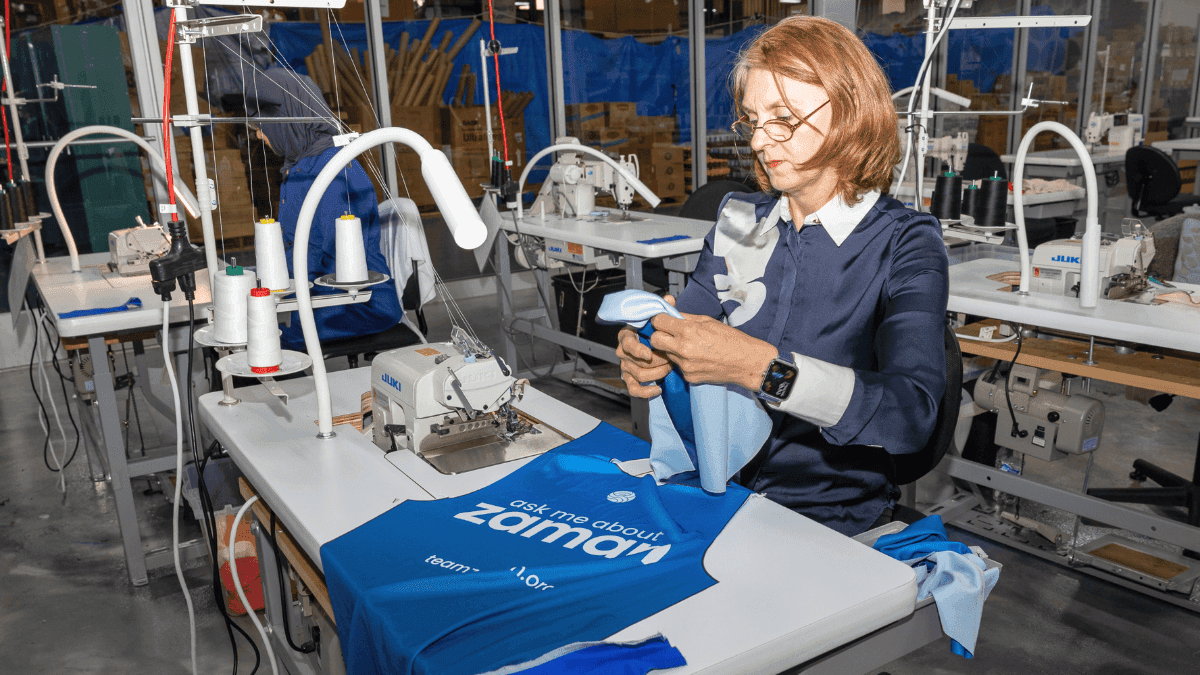
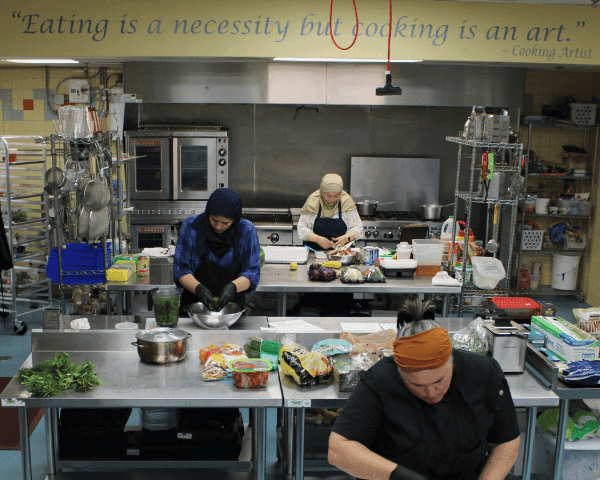
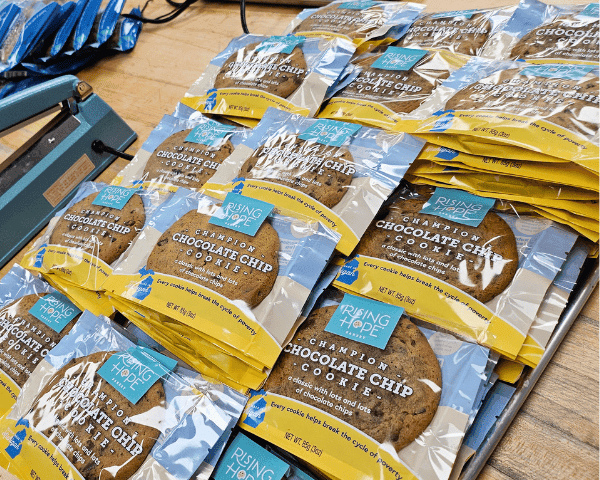
This led to us having employment on site, both in our Rising Hope Bakery, which is an opportunity for our culinary graduates, and then we opened an industrial sewing factory on site as well, where folks can continue to hone their skills, but also learn how to be a good employee.
Our on-site industrial sewing factory accepts contracts. We have some partners, such as a local business that creates jerseys for various school teams. They outsource some of their contracts to Zaman because they believe in the mission. So we're able to make this paid on-the-job training for the graduates of our programs.
You also provide international humanitarian relief. What does that look like, and how does that fit into all of this amazing work that you're doing at home?
We had always intended for Zaman to have an international presence, which is why our official name is Zaman International. We actually started with the international piece, doing humanitarian work in Bosnia, and it kind of grew from there. The majority of our global work happens through a partner, the International Medical Corps. We've been working with them since we worked in Bosnia.
We can connect our donors and fundraising efforts to support the programs they implement overseas. We don't want to reinvent the wheel. We know that [the International Medical Corps] has a track record of not only efficient work but also transparent work, which is always very important to us.
For example, our community of support includes many Lebanese Americans. When there was the explosion in Beirut several years ago, we started a campaign called “Lift Lebanon,” that supported the International Medical Corps’ relief efforts, both humanitarian and medical.
We've done this in 26 countries to date. Our primary goal in examining international work is to ensure it's responsive to the actual needs on the ground.
What else would you like to highlight about Zaman or the community you work with?
I'd like to highlight the work we accomplished through private sponsorship [of refugees]. The initial process of resettlement, from application to travel, was not core to our mission. However, the Office of Global Michigan, which is where our state refugee coordinator sits, knew of Zaman's track record regarding services to refugees and asked us if we'd be willing to pilot what was then the Welcome Corps in Michigan, and we said yes.
A point of pride for me was that we never compromised our insistence on doing everything with dignity. We approached it through relationship building—especially when numbers are a big concern and there's this push to get folks here. We agreed, but only if we were sure we were doing it the best way possible—bringing families here and then transitioning them with the appropriate services at Zaman. It helped to lessen the trauma after arrival to know that they had a soft landing with Zaman.
Sponsorship has been a huge part of our story for the last couple of years. And it's also inspired us to be more involved at a state level in terms of advocacy, and doing what we can to support both those who might come someday and those who have recently arrived.
We resettled 25 cases altogether.
You have what you call Zumanitarians. What does that volunteer or support system look like for your organization?
From the very beginning, Zaman has been truly volunteer supported. Even when we look at donations, we're still about 60% reliant on individual donors versus other sources of funding. It’s a blessing, but also a lot of pressure, because we want to make sure that anything we put into this world is worthy of the donor dollars they've trusted us with.
What's always top of mind for us is that we are not only stewards of our clients, but also of the donors and those who assist us. Some of them are one-time volunteers, but we have a solid core of people who are recurring volunteers, whether it's weekly or monthly. We've also had former clients who then become volunteers. That's always really amazing to see.
What we aim to do is find a place that's not only impactful for Zaman, but also for each individual who donates, whether financially or through their time. We couldn't do this work without our Zamanitarians.
How can our Welcomers contribute to your cause?
Financial donations are always appreciated, no matter where you are in the world. Another fun way to support us is by trying our cookies. We have our Rising Hope Bakery on site. Our cookies are available for purchase, and we ship throughout the U.S. So, if you'd like to send them as a gift to yourself or someone else, that's another way to make a difference at Zaman. The funds from the cookies support our workforce development programming.
It’s also important to support organizations like Zaman in your own communities, as I believe it helps advance the mission and the sense of hope and dignity that Zaman aims to instill in the world.
More stories of welcome