The long road to citizenship for two wartime translators
U.S. citizenship is a birthright for millions of Americans, but for those who choose to earn it—often after leaving loved ones behind and escaping danger and conflict—the journey does not come easily.
While Janis Shinwari and Azad Sleigher were born a decade apart and in different countries, their shared experiences reflect those of millions of aspiring Americans.
Growing up in the shadow of war
Born in Afghanistan in 1978, Janis was 2 years old when Russia invaded, marking the beginning of the Soviet-Afghan War. At age 5, he remembers grocery shopping with his mom when he saw his first explosion as a movie theater was bombed.
“We grew up with those types of things. That was the normal part of our life,” he said.
Throughout his childhood, Janis and his family moved around Afghanistan. In school, he recalled the drinking water being poisoned and losing friends to the attack. Their home was struck by a rocket, killing three of their neighbors.
Janis was a teenager when the Taliban took control in 1996. He remembers going to the local bakery one morning to pick up some bread.
“I saw a few women that came to get bread from the same bakery. The Taliban jumped out of their pickup trucks, and they started hitting these women because they didn’t have their burqas,” he said.
He went home, had his parents and older brother gather the clothes they could, and then fled to Torcum to cross the border. There were more than 100,000 Afghans waiting to cross into Pakistan, the only place they could flee to at the time.
Once in Pakistan, Janis and his older brother went to the closest village looking for construction work. They’d work from 6 a.m. to 9 p.m., making 45 Pakistani rupees per day, equivalent to 50 cents USD.
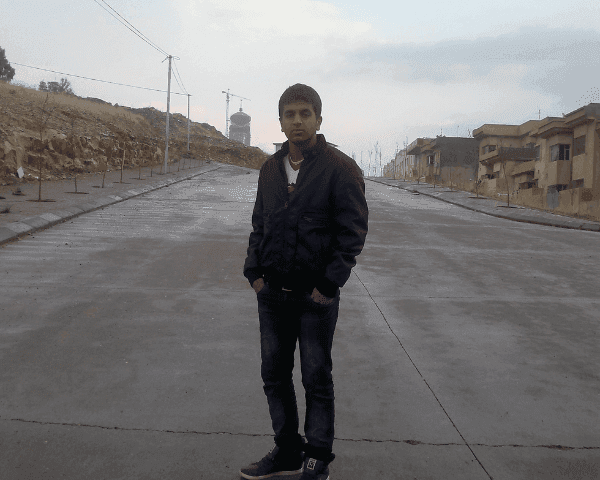
Azad was born in Baghdad, the capital of Iraq, in 1996. In 2000, under the regime of Saddam Hussein, he and his family moved to Kirkuk, a diverse city in central Iraq. He had a mostly happy childhood there despite the conflict, but the American military presence in his city stood out to him, having occupied Iraq since 2003.
He remembers the first time he ever saw Americans on his drive to Kirkuk. There was a U.S. Army base off the side of the highway they were driving on, and the soldiers were taking a break outside playing American football.
“They looked really cool. That was the initial reaction,” Azad said.
The more he saw the American military in the town, the more intrigued he became about Americans and American culture, and he realized he was drawn to the idea of moving to the U.S. He learned that one path that could potentially lead to an American visa was to serve as a translator supporting American troops, so he started to study English, which quickly became his favorite class in school.
Any chance he had, he would talk with the American soldiers. He’d ask them their names and other basic questions—anything to test his language ability.

There was bad stuff that happened all the time, but it became part of life… there were explosions, there were kidnappings, bad things happened.
The choice to serve
In Pakistan, Janis was also learning to speak English by watching American movies on a VCR he found at a yard sale. He watched the Arnold Schwarzenegger movie “Commando” on repeat, learning the dialogue. He would write the words down and use a dictionary to translate them from English to Pashto.
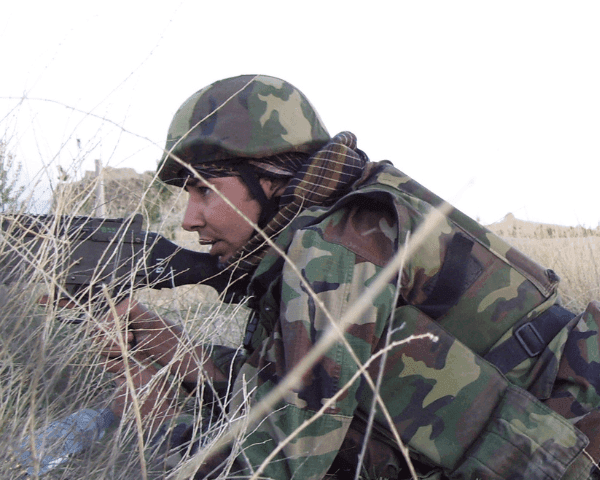
In 2001, when the U.S. and its allies overthrew the Taliban, Janis and his family finally returned to Kabul, where he began working as an English teacher. He soon became one of the best teachers at the school. A few years later, in conversation with some American soldiers, Janis was asked to apply for a translator position because they needed strong English speakers.
He went to the closest U.S. military base the next morning to begin the application process. After thorough language exams—translating between Dari, English, and Pashto—he was told he had the job, and that more paperwork and screenings were to come.
I knew this job was not easy… but we had to do it, and I had to support my country, and this was a way that I could use my knowledge to support my country.
Back in Iraq in 2011, the U.S. military completely pulled out of the country, and all of the soldiers were now gone. Azad felt one door close, but he was not ready to give up on his dream of a life in the United States.
“That was very heartbreaking for me because that was my only hope to work with these guys,” Azad said. He knew his only other option was to attend the American University in Northern Iraq, which was in a relatively safe region and run by U.S. professors and staff.
Shortly after enrolling at the university, a new war began, and ISIS pushed into Iraq from Syria. This brought the American military back to Iraq, and they once again needed translators who spoke English, Arabic, and Kurdish.
“Now there’s an opportunity in front of me,” explained Azad, and he applied for the role of translator. After an extensive round of testing and background checks, Azad was offered the job.
To accept the position, Azad would have to leave his dream school. He had been awarded an anonymous scholarship to study at the university, an opportunity he found difficult to turn down. He made the challenging decision to drop out of college and take the translator job, telling the school that they should give the scholarship to another student.
“So I go ahead and become a translator. I go to Mosul, go to war,” Azad said.
Realities of combat
Now as translators serving in the military, both men were on the frontlines of the conflicts that were impacting the daily lives of their fellow citizens and shaping the geopolitics of the region and beyond. And they were also living the realities of war alongside American troops.
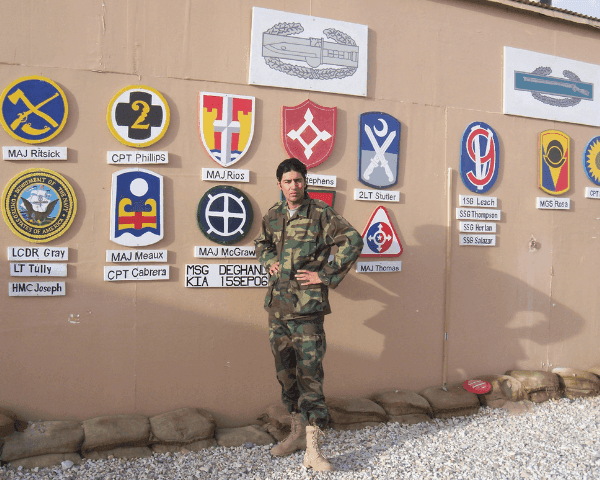
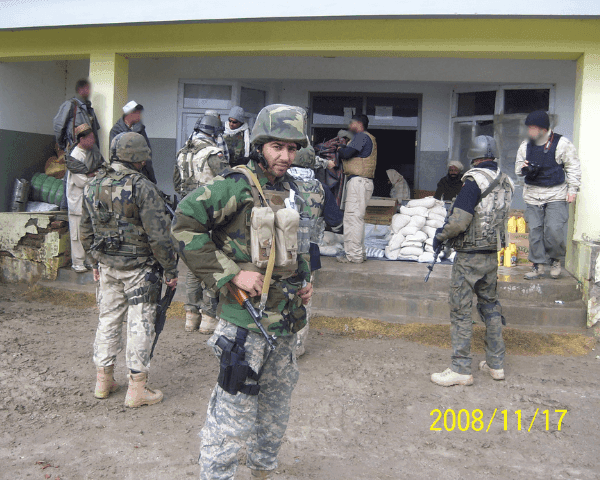
Janis was relocated to a few different stations. In 2008, two weeks after deployment to a new base, a nearby unit was ambushed by the Taliban, and their truck was blown up. Janis was among the team that was sent out to recover the unit. He found two Taliban fighters sneaking up behind a U.S. soldier who had fallen into a ditch. Janis was able to shoot the insurgents and save the soldier’s life.
The man that Janis saved, Matt Zeller, was a U.S. Army intelligence officer and, after the attack, he asked Janis to work with him. The pair worked together until Matt’s assignment in Afghanistan ended. What Janis didn’t know, though, was that after that interaction with the Taliban, he was added to the terrorist group’s watch lists.
He was soon called into their base’s Afghan National Army Intelligence offices, where the commanding officers gave him the news. They explained that Taliban sources had reported that if Janis was caught by the Taliban, he would be killed.
Janis was married with a young son and a daughter on the way. He knew that he had to survive to provide for his family and keep them safe.
He transferred to Kabul, which allowed him to go home every night and see his family.
Having this peace was good, until he began to receive threatening phone calls from the Taliban. At first, he thought they were fake threats. But when unknown men came to his door. Janis’s dad lied, saying he was not home, and eventually the men believed him and left. As they left, Janis’s father saw more men behind him, waiting with rifles. That’s when he realized he was no longer safe in his own house.
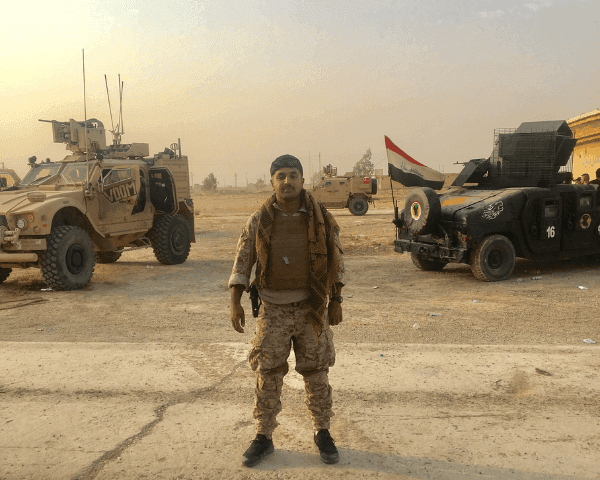
In Iraq, Azad faced his own dangers as a translator. He spent years working as a translator for the Marine Special Forces and Navy SEALs. From 2017 to 2019, he worked in combat operations and, at one point, was kidnapped for two days.
The road to the U.S.
Janis’s captain told him about the special immigrant visa (SIV) opportunity. At first he wasn’t interested. He loved Afghanistan and wanted to help liberate and then rebuild the country. But with his life now in danger, he applied for the visa in 2010.
Like Janis, Azad learned about the SIV program from the American officers he supported. The program had recently been renewed for translators, including those in Iraq. He was able to apply for the visa, and Azad and his family arrived in the U.S. in 2019.
Azad had an almost seamless process obtaining his visa, which is extremely rare. He served the required period as a translator and then got a letter of support from a flag officer, someone who holds an admiral ranking.
I’m here today because I’ve gotten lucky, but I also worked really hard.
Janis did not have the same experience. He applied for the visa in 2010, and by 2013, he was still waiting. Throughout the entire waiting period, Janis slept at the base, unable to see his family who was staying at their grandparents' house, and his situation was getting worse every day. He then learned that this would be the last unit stationed at this base, meaning Janis would soon lose his protection.
He reached out to his partner and friend, Matt Zeller, who was back in the U.S. Matt got to work, calling his elected officials in Congress and doing everything he could to move the process forward for Janis and his family. Through Matt’s persistent efforts, Janis was granted an immigration interview and security review, and was finally approved for the visa.
When Janis went to pick up his visa, he did an interview with with a reporter for Yahoo News. After the interview was published, his visa was revoked due to an anonymous call to American authorities by the Taliban claiming that Janis was a security threat.
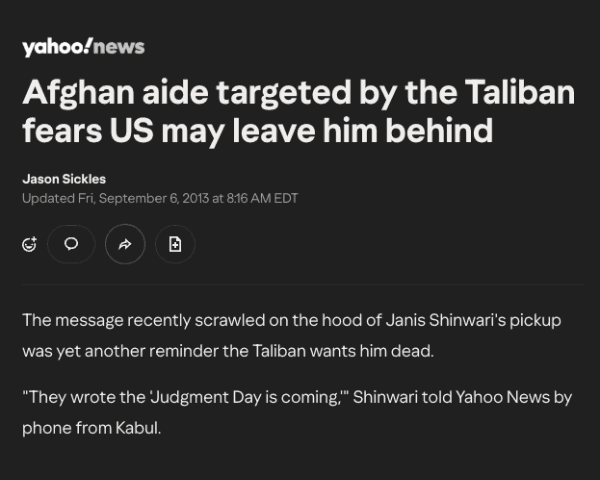
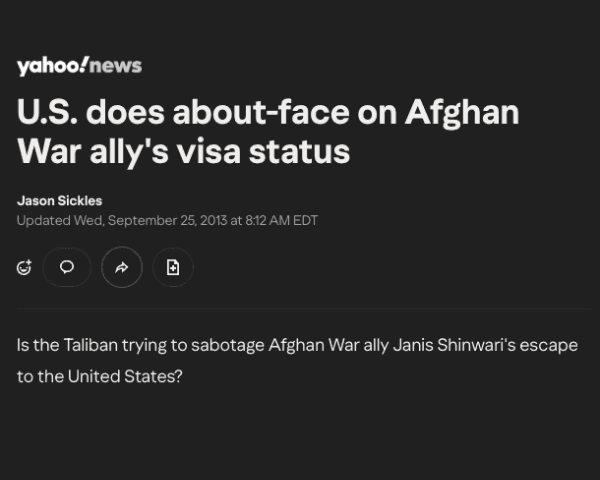
Janis had already resigned from his job and sold his belongings, but was told he would not be allowed to enter the U.S., despite his long history of working with the U.S. military. Matt went back to his contacts in Congress and the U.S. State Department, trying to figure out what had happened.
In the meantime, Janis had to go into hiding, “changing locations, sometimes with nephews, sometimes with cousins, and the Taliban were searching [for] me. And then after 45 days I got my visa, and I came to the United States.”
The journey to citizenship
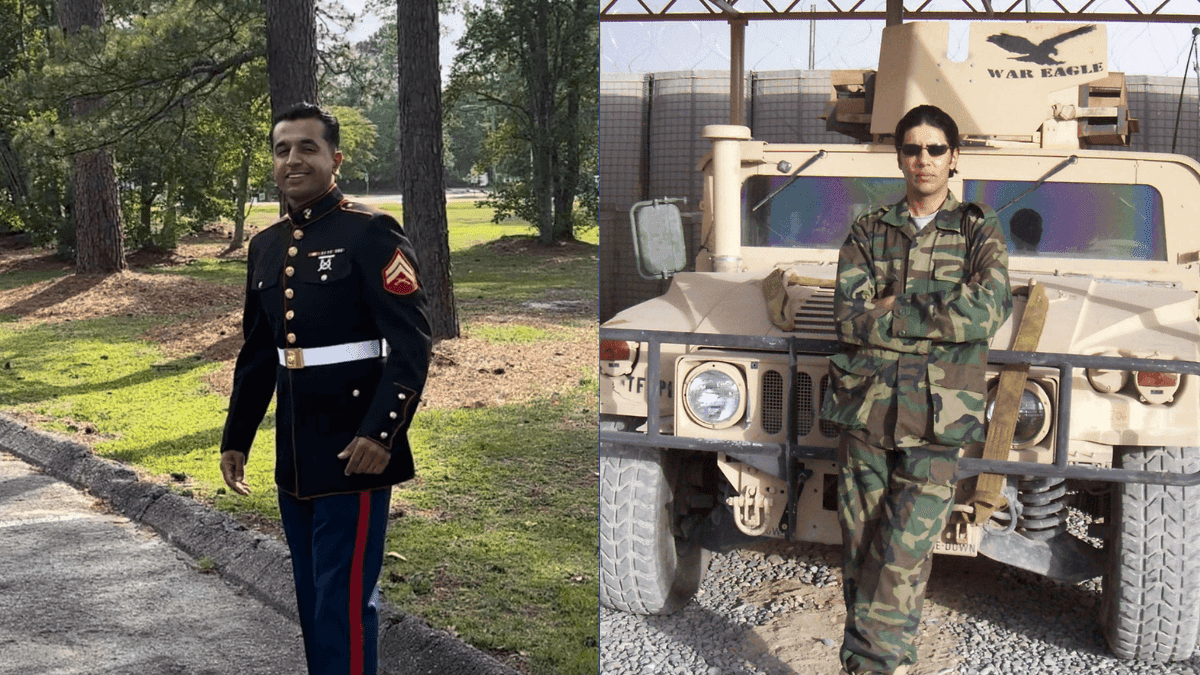
After Azad arrived in the U.S., he was able to move to Wilmington, North Carolina, and lived with a retired U.S. Marine that he knew from his service in Iraq. Azad enlisted in the Marine infantry, went to boot camp in South Carolina, and was soon stationed in California.
As a special immigrant visa holder, he obtained his green card quickly—in about 90 days. Immediately, he went to work to understand the citizenship process. Throughout his time in the Marines, he stayed on top of the application process, meeting all of the requirements and completing every milestone step. Over the next five years, he submitted all the necessary paperwork, attended multiple biometrics appointments, and studied for the citizenship exam.
In 2022, after passing the citizenship interview and civics test, he took the Oath of Allegiance and became a U.S. citizen.
“It was too good to be true,” Azad said.
When I swore in, and I saw the American flag, it was everything I worked really hard for, finally paying off.
When he returned to the military base after the oath ceremony, he immediately woke a friend, too excited to wait until morning. The friend asked, “Why’d you wake me up, dude?” Azad excitedly shared, “I got my citizenship. I have to tell somebody, it was everything I wanted, and it finally happened.”
When Janis eventually arrived in the U.S. after his visa was approved, he was shocked to find out there was nowhere for him to go. Janis and his family had made it out of Afghanistan, but they didn’t have a home, access to transportation, or any funds to rent an apartment or buy a car.
He felt lucky he had his relationship with Matt, and Matt was able to get him a hotel for the first two days and set up a GoFundMe to support the family. Within a week, the GoFundMe had raised $38,000. When Matt brought the check to Janis, he felt he couldn’t accept it. He was humbled by the generosity of his new community.
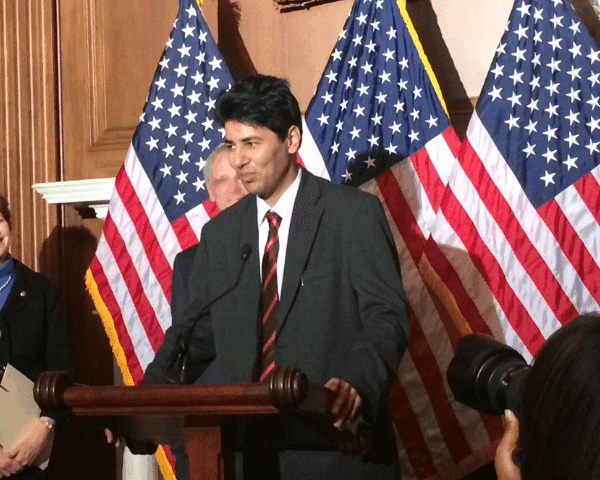
The money Matt had raised helped Janis and Matt fund the nonprofit organization No One Left Behind (NOLB) in 2013. Through NOLB, they were now able to support others who came to the U.S. with special immigrant visas so that those who arrived were met with welcome and support from the very beginning of their American journey. That work continues today. NOLB advocates for policies and legal pathways to support SIV allies, assist in furnishing homes for newcomers, and helping them find cars and jobs—everything they can do to provide a smooth transition into life in the U.S. Today, they have helped over 60,000 SIV holders.
After five years of permanent residence, Janis and his family were allowed to apply for citizenship in 2018. He reflected that the process was fast and that he was able to get to his interview quickly. But at the end of it, the USCIS officer administering the exam told him, “I can't tell you if you passed the interview. I need to review your case again.”
The same thing happened to his wife. This led to two years of waiting.
Janis contacted members of Congress, he and Matt sent emails to the State Department, and after two years of persistence, his citizenship was finally approved in 2020.
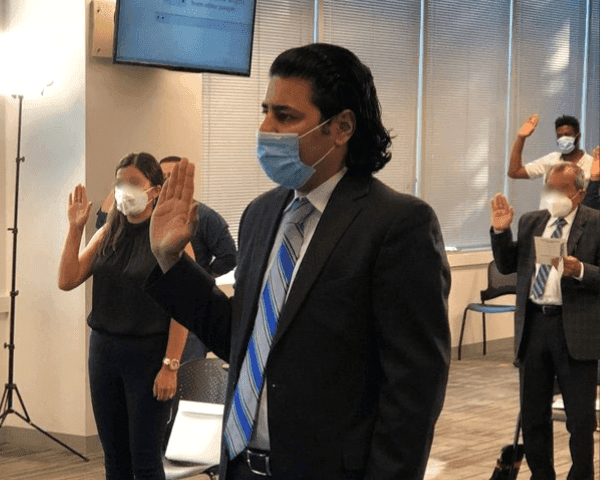
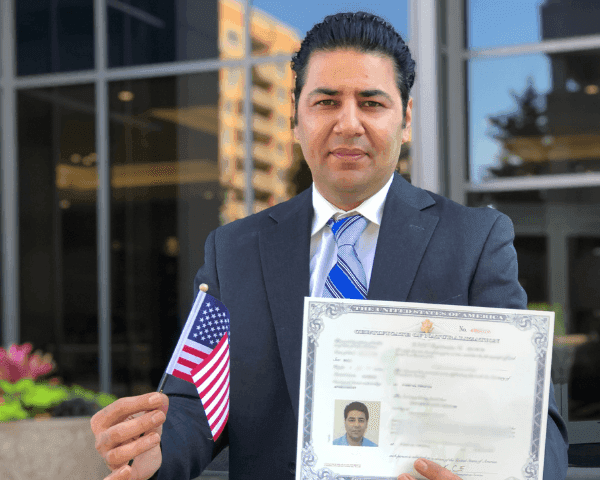
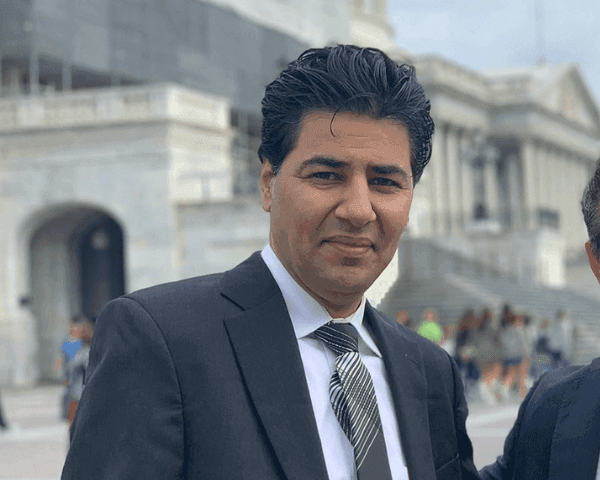
Acting Homeland Security Deputy Secretary Ken Cuccinelli administered the Oath of Allegiance to Janis and presented him with his Certificate of Naturalization at the ceremony.
“Now I’m a proud U.S. citizen. My wife, my kids, everybody’s a citizen. We have a beautiful life here in Northern Virginia,” Janis said.
The citizenship of the United States, it's a big privilege, it is a big honor, it is a pride for us to get.
The ultimate finish line
Today, Janis still plays a vital role at No One Left Behind. Living in the suburbs of the nation's capital, Janis dreams of one day running for public office. Azad is also involved with No One Left Behind, having first connected with the organization in 2019 shortly after his arrival in the United States.
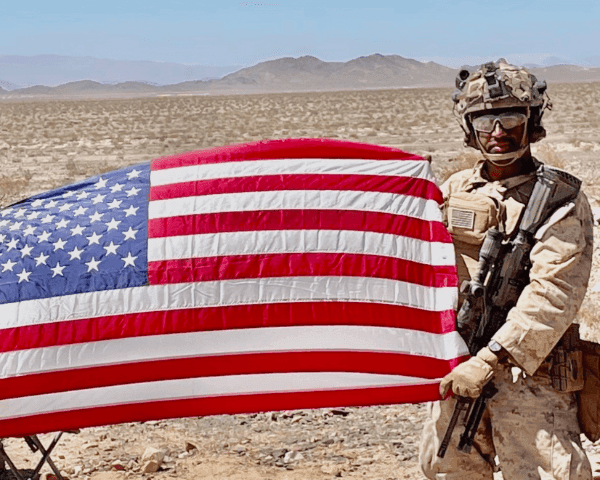
Azad is now an ambassador and board member for the organization, managing cases for SIV holders as they first arrive in the U.S.
“What I do is so much bigger than me; it gives me purpose,” Azad said about his involvement with the organization.
Janis and Azad have found safety and security as U.S. citizens, but for so many others, uncertainty looms. Currently, the Iraqi SIV cap is limited to 50 people per year; Azad’s goal is to expand it.
“I grew up dreaming about being in America, and I made it happen,” he said. “But there are still people that I'm in touch with on a daily basis that have the same aspirations... They lost their jobs as translators, they're in danger, and they cannot get out.”
For the pair, citizenship was more than a legal status; it was a commitment they made through years of service, patience, and determination. Now, through their work with No One Left Behind, they are committed to civic service—a shared value that defines their American identity.
More stories of welcome