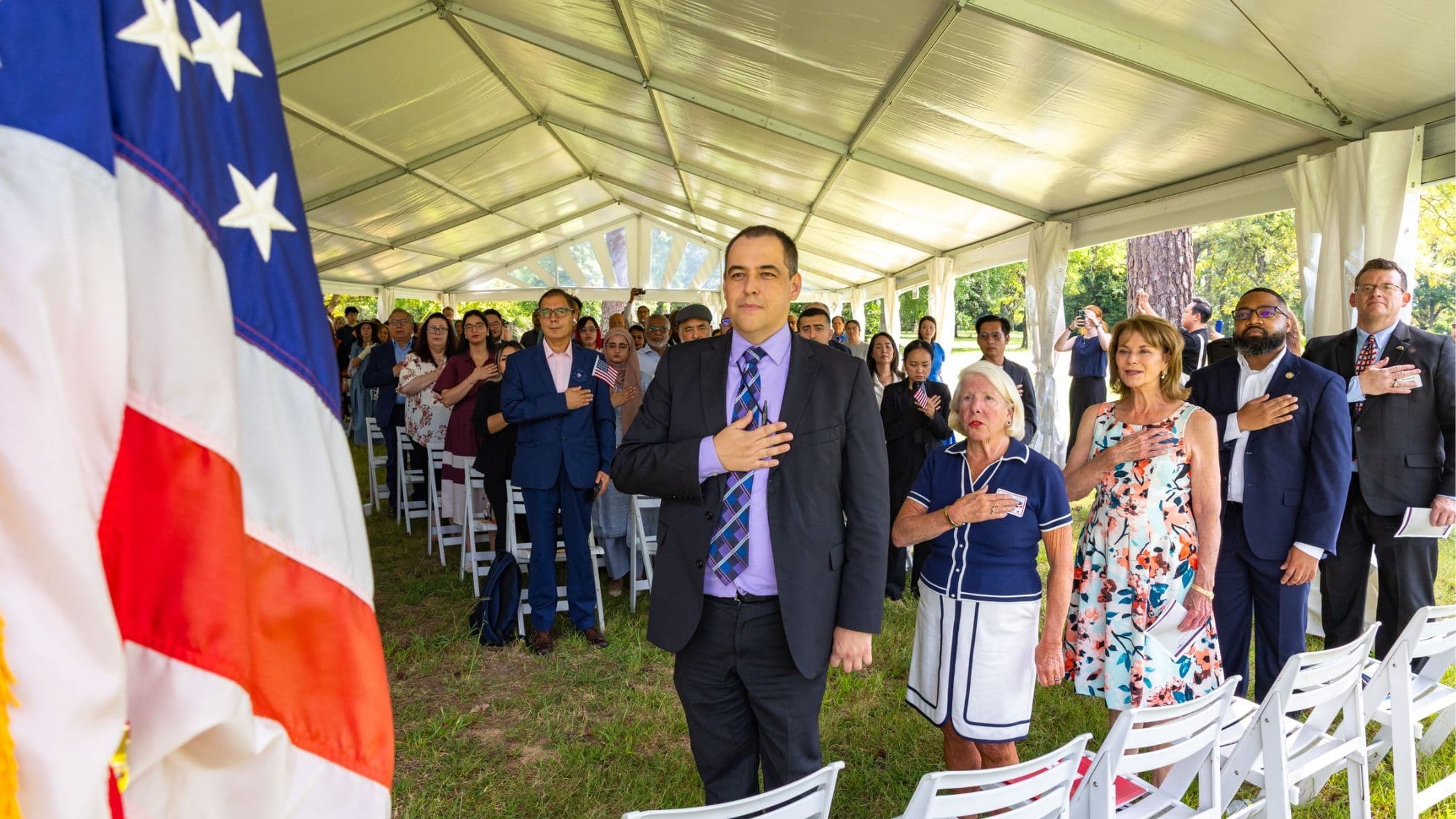
Finding a new beginning through citizenship
When Khan arrived for her citizenship interview near Dallas, most of the people waiting around her had family by their sides. She walked in alone.
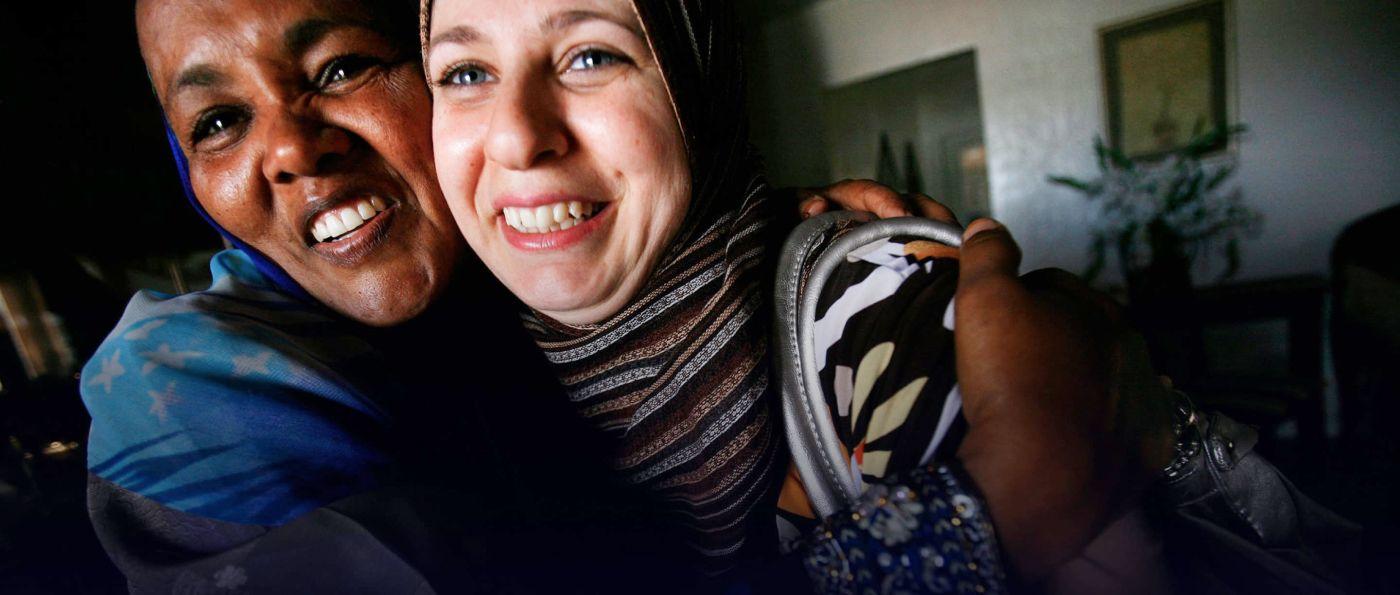
But she didn’t feel alone. Minutes earlier, Khan had been talking with her Citizen Guide, who lives states away in North Carolina.
“How she taught me, I was like ‘I can do it,” Khan said. “I just went inside, and I was very, very confident that I can answer anything.”
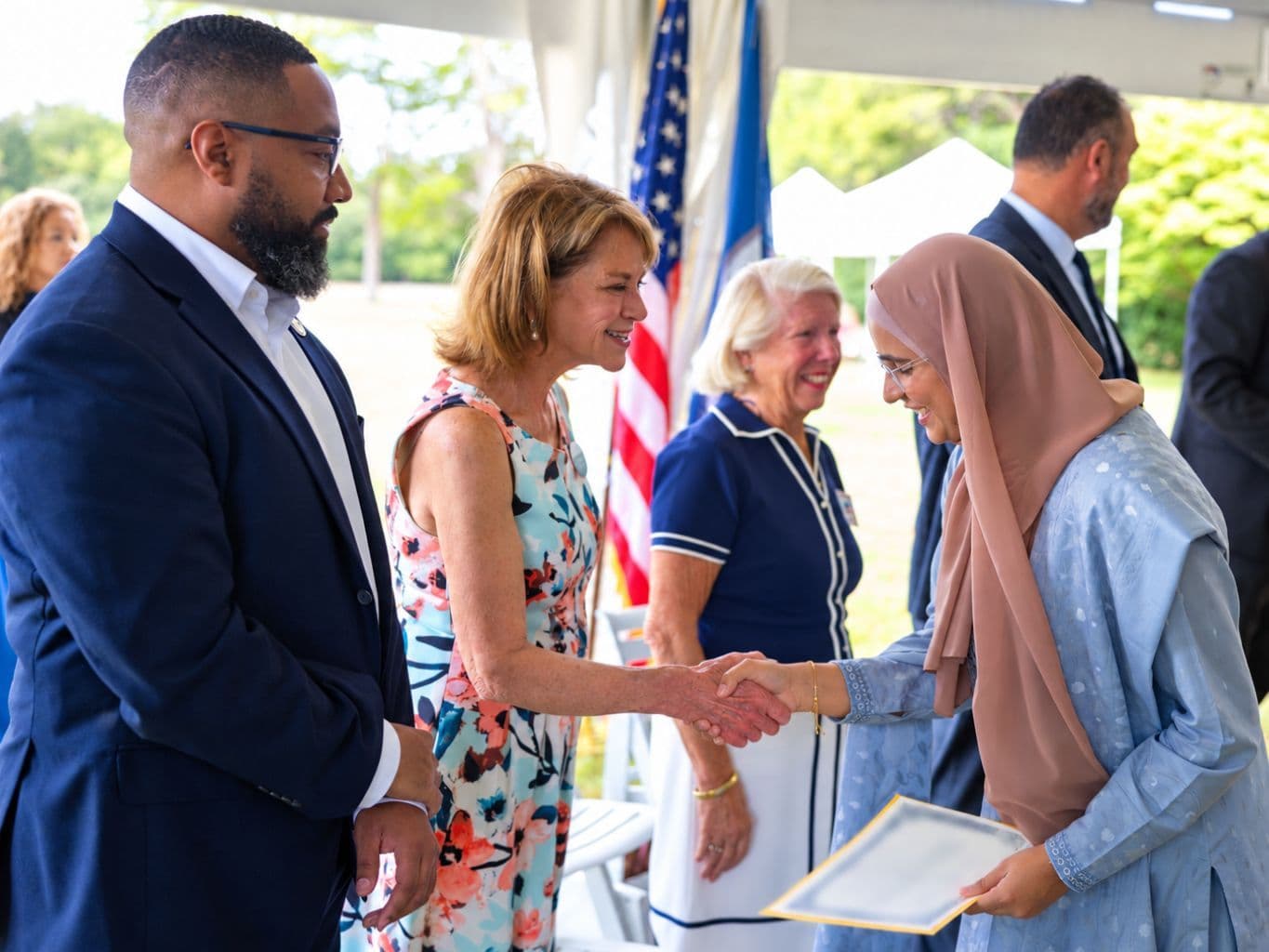
The interview lasted 45 minutes. When it came time for the civics test, the officer stopped after six questions—Khan had answered every one correctly. As soon as she walked out, she called her Citizen Guide to share the news: She had passed.
The two had started as strangers, matched through the Welcome.US Citizen Guide program, which pairs lawful permanent residents (green card holders) with trained volunteers to prepare for the citizenship test.
Their first sessions took place at midnight Khan’s time, while she was visiting family in India. By the end, Khan had the confidence she’d been missing for years.
‘I can be very comfortable with you’
Khan was born in Dubai and grew up in India, where she studied English in school and earned a Ph.D. in pharmacy. At 24, she married her husband Mohammed, and in 2015, she joined him in the U.S. where he works in IT. Today, they live in Dallas with their 8-year-old son and 3-year-old daughter.
About a year ago, the family moved into a new neighborhood, where they walk their son to school and have gotten to know their neighbors. They’ve also found community with members of their local mosque.
“All in all, it’s a good package in Dallas,” Mohammed said.
Khan’s own family is spread across the world: Her sister lives in Canada, her brother lives in Dubai, and her parents are in India. She hasn’t seen her brother in 10 years.
After more than a decade in the U.S, Khan decided to pursue citizenship, for her children and for herself.
“We stay here because we want a good education for our kids and a better life,” she said. “Now the kids are growing up, so I want to do something for myself.”
Mohammed had encouraged her for years to start preparing, but she was afraid. When Khan began working with her Citizen Guide, she knew almost nothing about U.S. civics beyond the names of the current president and vice president.
“[My Citizen Guide] didn’t go through just remembering questions,” Khan said. “She told me the details of the question and the history and everything.”
From the branches of government to Susan B. Anthony and the fight for women’s right to vote, Khan and her Citizen Guide walked through the history behind each question.
The sessions worked because Khan felt safe. She describes herself as introverted and anxious, someone who struggles to say a word around people she doesn’t know. But at their very first meeting, she told her Citizen Guide, "I feel something, like I can be very comfortable with you.”
“When I asked her many times, she will always explain [it to] me,” Khan said. “She never said, ‘I already explained [this to] you.’”
The whole family got involved in helping her prepare. Khan’s son, who loves maps, helped her practice the names of the 13 original colonies and corrected her pronunciation of Massachusetts.
Mohammed watched the change up close. Once Khan had someone to meet with and report back to, studying was all she wanted to do.

Without [the Citizen Guide] program, it would have been really difficult. I felt [she was] a totally different person, and she was very much confident.
In addition to the tutoring and mentorship of the Citizen Guide, he was quick to credit Khan’s own work, too. She took notes, did her homework, and arrived at each session prepared.
Khan put it in numbers: “On a zero to 10 scale, I was on zero, and [my Citizen Guide] has been giving me a 10 out of 10 confidence,” she said. Without this support, she believes she would have failed.
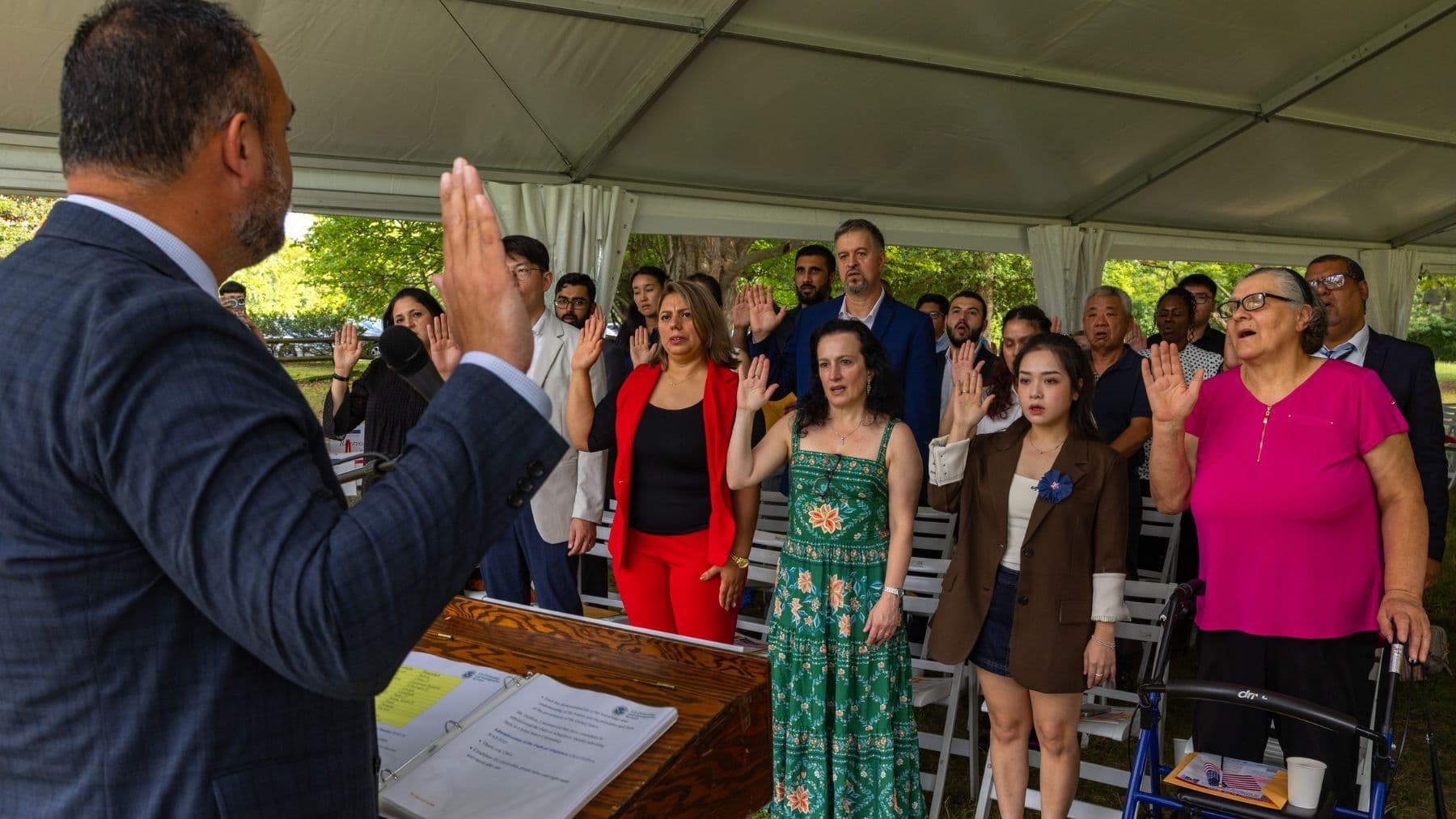
Taking the oath
Every time Khan and her Citizen Guide met, they went over the Oath of Allegiance, the promise every new citizen makes at the citizenship ceremony. Khan took it seriously: If she couldn’t say it and mean it with all her heart, she knew she wasn’t ready.
On Oct. 9, 2026, at a ceremony in Irving, Texas, five minutes from home, Khan finally said the words she had practiced for months, with her husband proudly watching from the audience.
“I was very happy,” Khan recalled.
While she wished her children could have been there to witness the milestone, she was excited to share the news with them afterward. Her son was especially curious about the ceremony and eager to know when he, too, could become a citizen since he was born in another country.
For Mohammed, watching his wife take the oath was a moment of immense pride and a glimpse into his own future. He has been on this citizenship journey with Khan and is waiting for his own interview to be scheduled.
“I was feeling as if it was my day,” he shared, as he smiled. “I was imagining myself and also was so excited for her.”
For Khan, citizenship means greater freedom and easier travel to visit her family, the chance to pursue new employment opportunities, the right to vote, and more opportunities for her children.
“I’m feeling very proud, and I’m being very responsible,” she said. She looks forward to the day she can celebrate Mohammed’s citizenship.
Mohammed sees citizenship as a two-way exchange. “It’s beneficial to us as a family, and we also add to the country as well,” he said.
Khan’s advice for anyone starting the process is simple: Be honest, be loyal, and learn the history of the country you’re choosing as your own.
“I think honesty plays the main role,” she said.
And she has one more recommendation: Don’t go it alone. Find a Citizen Guide.
More stories of welcome