
Noncitizens have served in the U.S. military for hundreds of years. The Immigrant and Nationality Act (INA), provides special provisions for military members, veterans, and their immediate family members to apply for U.S. citizenship through a streamlined pathway.
Whether you're navigating this process yourself or want to better understand the journey of those who serve, this guide explains the military path to citizenship, the challenges along the way, and resources that can help.
There are more than 50,000 active-duty, foreign-born service members and approximately 115,000 foreign-born veterans in the U.S. today who are eligible to earn U.S. citizenship.

Military service is part of America’s story, and so are the people who come from around the world to serve. Service members, veterans, and military families from across the globe contribute their skills, dedication, and commitment to our nation. Access to citizenship preparation and reliable guidance can help them navigate an important part of their journey and build their futures with greater confidence.
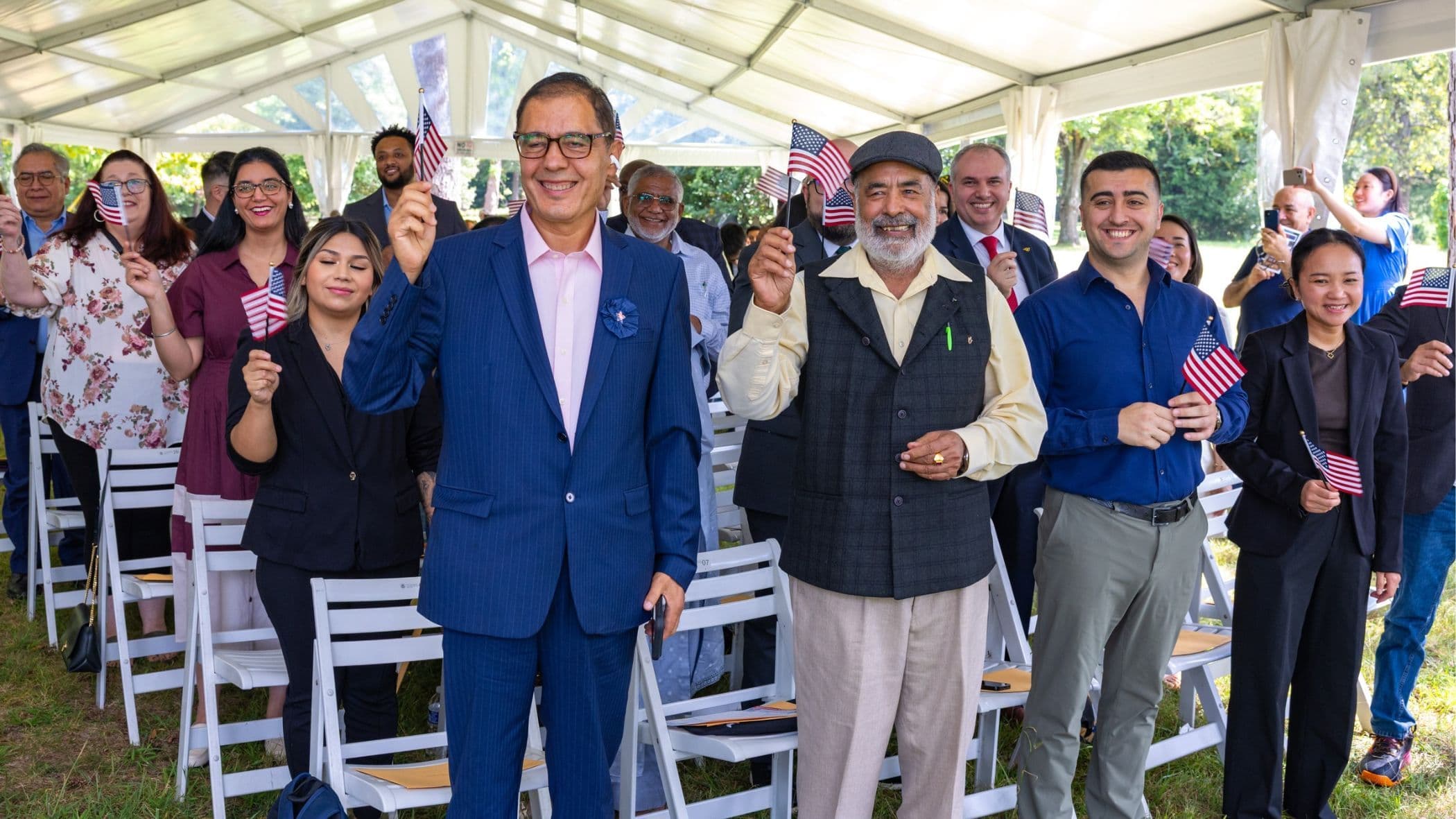
Their path to citizenship might look different than that of other noncitizens, but the support needed to reach the finish line remains the same.

Share citizenship resources
Know someone exploring citizenship through military service? Share information and support for service members and veterans navigating the citizenship process.
The military path to citizenship
Determining eligibility
For most people, the journey to U.S. citizenship starts by becoming a lawful permanent resident, or green card holder. Getting a green card is typically done through family sponsorship, work sponsorship, or by seeking safety, for example, as a refugee or asylum-seeker. People with a green card must reside in the United States for at least five years, or three years if they are married to a U.S. citizen, before applying for citizenship.
Those who serve as noncitizens in the U.S. military are granted eligibility for U.S. citizenship through section 328 or 329 of the Immigrant and Nationality Act. In recognition of their service, their path to eligibility is much shorter.
To earn eligibility, a service member or veteran must meet one of the following:
- One year minimum of honorable service in the U.S. military during peace times, green card required (INA 328)
- One day minimum of honorable service in period of hostilities, including any time since Sept. 11, 2001, green card is NOT required (INA 329)
Foreign-born service members also are exempt from meeting a state-of-residency requirement.
Steps to citizenship
Once a service member or veteran has confirmed their eligibility, there are several additional steps to applying for and earning citizenship.
- Submit form N-400: This is the same form that all citizenship applicants fill out. However, military service helps to bypass some of the more complicated steps, including an exhaustive residency history and an exemption from more than $700 in filing fees. USCIS also prioritizes processing military applications to expedite the process. But military applicants are required to provide additional documents with the N-400:
- Active duty personnel also submit Form N-426.
- Active duty personnel who are abroad also submit oversees also submits two passport photos and two FD-258 fingerprint cards.
- Veterans provide discharge papers and DD214 and NGB22 to show service and honorable discharge.
- Biometrics: Service members or veterans applying for citizenship will be notified that they will need fingerprinting done at an Application Support Center. They do not need an appointment, and other arrangements can be made if active-duty service members cannot report to a center. Like all applicants, fingerprints are sent to the FBI to check for undisclosed criminal or immigration issues.
- Interview and citizenship exam: This process is the same for anyone who applies for citizenship. The applicant meets in person with a USCIS officer, who will assess their spoken and written English. The application is reviewed line by line. Finally, the applicant takes the civics test to assess their knowledge of U.S. history and government. Based on the outcome of the interview, the USCIS officer will then either approve, deny, or put on hold the citizenship application.
- Naturalization ceremony: This can happen as soon as the same day the N-400 is approved. Applicants take the Oath of Allegiance, surrender their green card, receive a certificate of naturalization, and become a U.S. citizen.
When a soldier re-enlists, the platoon shows up to watch and support them. Nobody raises their right hand to an empty room. Allies who served beside our troops have earned the same turnout on the day they become citizens. If you know a family with a ceremony coming up, ask to be part of it. Being there for them can change their world.
Advantages to citizenship through military service
Several differences help streamline the citizenship process for service members and veterans.
- Shorter residency requirements (1 year or less)
- No state-of-residency requirement
- No application fees
- Applications receive priority processing
- Overseas processing is permitted
- Arrangements can be made for active-duty service members to meet certain requirements
There also can be advantages and special accommodations for the dependents and spouses of service members and veterans, including:
- Expedited processing
- Expedited naturalization
- Naturalization while abroad
Challenges to citizenship through military service
Serving in the military does not guarantee U.S. Citizenship; the application process is expedited, but overall, the experience is similar to the standard naturalization process.
“We engage with veterans that are at military institutions about to transition, and many of them could be in that situation where they are not yet citizens. A lot of times, they don’t know where to go from there, and I’ve heard some pretty unfortunate stories of how that ends,” said Mia Garcia, a Marine Corps veteran and Chief Advancement Officer at Combined Arms. “Early engagement and education is [important].”
Service members or veterans might lack awareness of the process or risk missing an important deadline while on duty. Challenges to earning citizenship during or shortly after military service include:
- Limited awareness or misunderstanding of eligibility requirements
- Leaving the military before meeting eligibility
- Missing or lost paperwork
- Missing appointments
- Administrative delays
- Legal complications that impact the application process
Resources for military service members or dependents
There are several resources and services available to assist service members and veterans with the citizenship process:
- Naturalization information for military personnel
- USCIS military topics
- Military OneSource Legal Services
- American Immigration Lawyers Association Military Assistance Program
- Military OneSource language interpretation and document translation services
- Preparing for the citizenship exam and interview: Welcome.US Citizen Guide program

Know someone who could benefit?
Help spread the word about the military path to citizenship by sharing this resource with someone you know.
- Find support and help spread the word: Get resources for those who serve—It's information worth sharing.
- Help someone prepare for citizenship: Learn how to become a volunteer Citizen Guide.