Refugee Resettlement 101
Overview:
Refugees are forced to make impossible choices in unimaginable circumstances. Every day, individuals and families around the world face the difficulty of leaving their homes, communities, and often family members behind because of threats to their lives or freedom.
In this section, we explore what it means to be a refugee, both the legal status and as a lived human experience. We'll examine how international protection systems work, what rights refugees hold, and how resettlement processes unfold.
Who is a refugee?
The U.S. government defines a refugee as someone who has fled their country because of a well-founded fear of being persecuted for their race, religion, nationality, membership of a particular social group, or political opinion.¹ Refugees no longer reside in their country of origin and are seeking safety elsewhere. Once recognized as a refugee, a person is granted certain protections as established by the 1951 Convention and its 1967 Protocol, such as the right to not be returned to a country where they face serious threats to their life or freedom.² Even before a refugee is resettled in their new home country, their status as a refugee guarantees rights and protections that signing countries of the Convention agree to uphold.
Why do people become refugees?

No one leaves home unless home is the mouth of a shark.
People do not choose to “become” refugees. Often a last resort, the decision to leave home comes in response to threats such as war, persecution, or political violence, often made worse by climate or economic crises. Refugees flee their homes because the risks to their safety and life are so great that they have no choice but to seek safety outside their home country because their government cannot or will not protect them from those dangers.
The journey of a refugee
Escaping danger is only the beginning
Escaping danger is only the beginning of a refugee’s often long and difficult journey.⁴ The path to safety can involve years of uncertainty, waiting, and hope, requiring individuals to flee their homes, navigate unfamiliar legal systems, and seek protection in a new country.⁵ This journey looks different for everyone; below is just one example of the process of leaving home and seeking refuge.
- An individual or family crosses a border to escape violence or persecution.
- Once outside their home country, refugees may register with local authorities or the UN Refugee Agency (UNHCR) to seek protection.
- Refugees are interviewed to determine whether they meet the legal definition of a refugee, a process called a Refugee Status Determination (RSD). This process can take months or years, depending on the country and caseload.
- While waiting, many live in refugee camps or urban areas with limited access to work, education, or healthcare. Some remain in this situation for years or generations without permanent solutions.
- If UNHCR decides to refer a refugee for resettlement, they submit the refugee’s file to a participating country. It can take several months to transfer information from UNHCR to the referral country’s government. Then, the government conducts further vetting and screening, and decides whether it will resettle the individual(s). Less than 1% of refugees are resettled to a third country participating in this process.
- Resettled refugees receive permanent legal status in their new country and assistance with housing, language, employment, and education through a private sponsor group, resettlement agency, or community-based organization.
Welcoming refugees to the United States
The United States has a long history of welcoming people fleeing violence and persecution. It reflects a national commitment to humanitarian protection and the values of safety, freedom, and opportunity.
A few moments of welcome in the last century:
- World War II and Holocaust survivors (1945–1952): In the aftermath of the war, the U.S. admitted thousands of Jewish refugees and displaced persons escaping Nazi persecution.⁶
- Hungarian Revolution (1956): After the Soviet crackdown on Hungary’s uprising, over 30,000 Hungarian refugees were welcomed to the U.S.⁷
- Vietnam War and Southeast Asia (1970s–1980s): Hundreds of thousands of Vietnamese, Cambodian, and Laotian refugees resettled in the U.S. following conflict and genocide in the region.⁸
- Post-2000s refugee crises: The U.S. has continued to resettle refugees from conflicts in Iraq, Afghanistan, Somalia, Syria, Ukraine, and many others.⁹
- Launch of recent private sponsorship programs: Between 2023 and 2025, more than 2 million Americans across all 50 states participated in private sponsorship programs—legal temporary pathways for Americans to welcome people in need—ensuring a safe and orderly process to arrive in the U.S.¹⁰
- Pause of USRAP: In January 2025, the U.S. resettlement program—including private sponsorship—was paused for evaluation, and remains paused today. See our policy updates page for more information.
Story spotlight
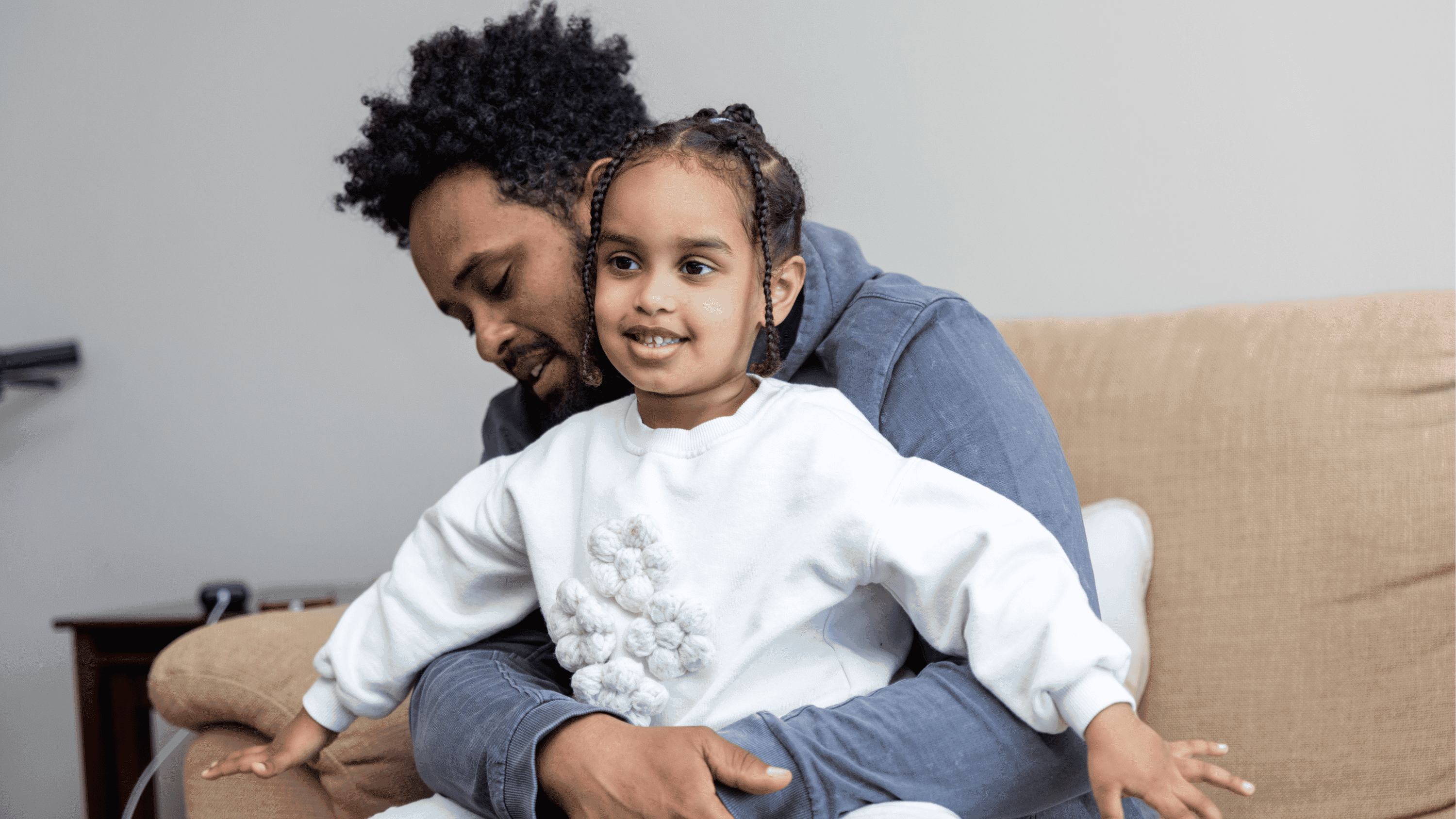
Read about one refugee family's journey from Eritrea to Maryland.
Here's how the U.S. refugee resettlement system works:
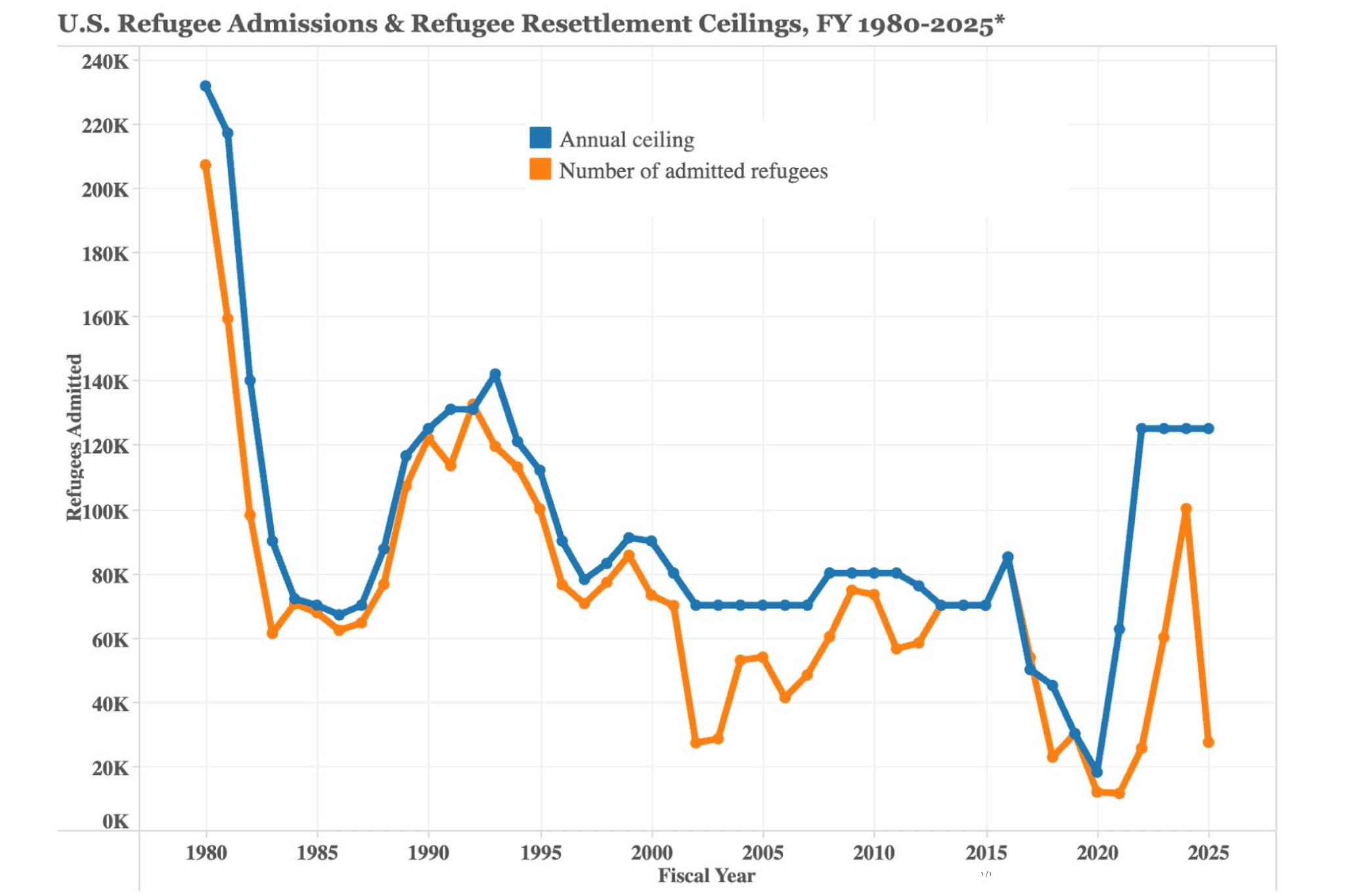
- The U.S. works with the UNHCR and other partners to identify and vet refugees overseas for resettlement. Each year, the President sets a ceiling on how many refugees the U.S. will admit, recognizing that the actual number of refugees resettled may not reach that number.¹¹
- Refugees undergo extensive multi-agency and multi-stage background checks, interviews, biometric data collection, and medical exams.¹²
- Approved refugees are placed in communities across the country with the help of private sponsor groups or resettlement agencies. These support networks provide initial housing, food, job placement assistance, and English language classes.
- Refugees receive lawful status and can apply for a green card after one year. After five years, they may apply for U.S. citizenship and receive all the accompanying rights and responsibilities.
FAQs about refugees
What benefits do refugees receive upon arrival to the U.S.?
- Legal status and work authorization that allows them to obtain employment immediately
- Access to public benefits, including healthcare coverage, food assistance, and temporary financial support
- Path to permanent residency (green card) after one year and eligibility for citizenship after five years
Do refugees pay taxes?
Yes. Like other residents, refugees are required to pay local, state, and federal taxes, including income, property, and sales taxes. They contribute to Social Security and Medicare from their first paycheck.
Are refugees vetted before coming to the United States?
Yes, refugees undergo extensive vetting before being admitted to the United States. The process is among the most rigorous for any traveler to America and typically includes:
First, the UN Refugee Agency (UNHCR) conducts initial screenings and refers only the most vulnerable cases to the U.S.
Then, multiple U.S. security agencies conduct extensive checks:
- Biometric screenings (fingerprints, photographs) are checked against the Federal Bureau of Investigation, the Department of Homeland Security, and the Department of Defense databases
- In-person interviews with trained Department of Homeland Security officers
- Medical examinations to ensure individual and public health safety
- Multiple background checks against terrorist watchlists and international databases
This comprehensive vetting process often takes two years or longer to complete, with refugees remaining in camps or temporary situations during this time. Only after clearing this extensive multi-agency, multi-step process are refugees permitted to enter the U.S.