Meet the Welcomers showing up to make a difference
Every day in neighborhoods across the country, ordinary Americans are doing something extraordinary. These Welcomers come from different generations, backgrounds, and hold different beliefs, yet they share an unwavering commitment to welcoming. They know that extending compassion to newcomers doesn’t just change one person’s life—it transforms their own, and strengthens their communities.
In October 2025, Welcome.US posed a simple question: Who do you know who embodies the spirit of welcoming? The Heart of Welcome campaign drew dozens of nominations from 23 states, shining a light on the compassion, support, and friendship Welcomers show newcomers every day.
From Jessica in California who organized a clothing closet for refugees and reunited a Syrian girl with her dog, to Corey in Arizona who experienced deep hospitality in Ukraine that later inspired him to open his home to a Ukrainian friend, to Gladys in Pennsylvania who balanced work and family while she welcomed five Ukrainian and two Afghan families with empathy, respect, and friendship—these nominations reflect a shared truth that our enduring commitment to welcoming helps newcomers and the communities they live in thrive together.
Even when the work is challenging, the heart of a Welcomer endures. Below are just a few of the inspiring stories that show welcoming in action.
Meet Judy
Over 70 years of curiosity and compassion
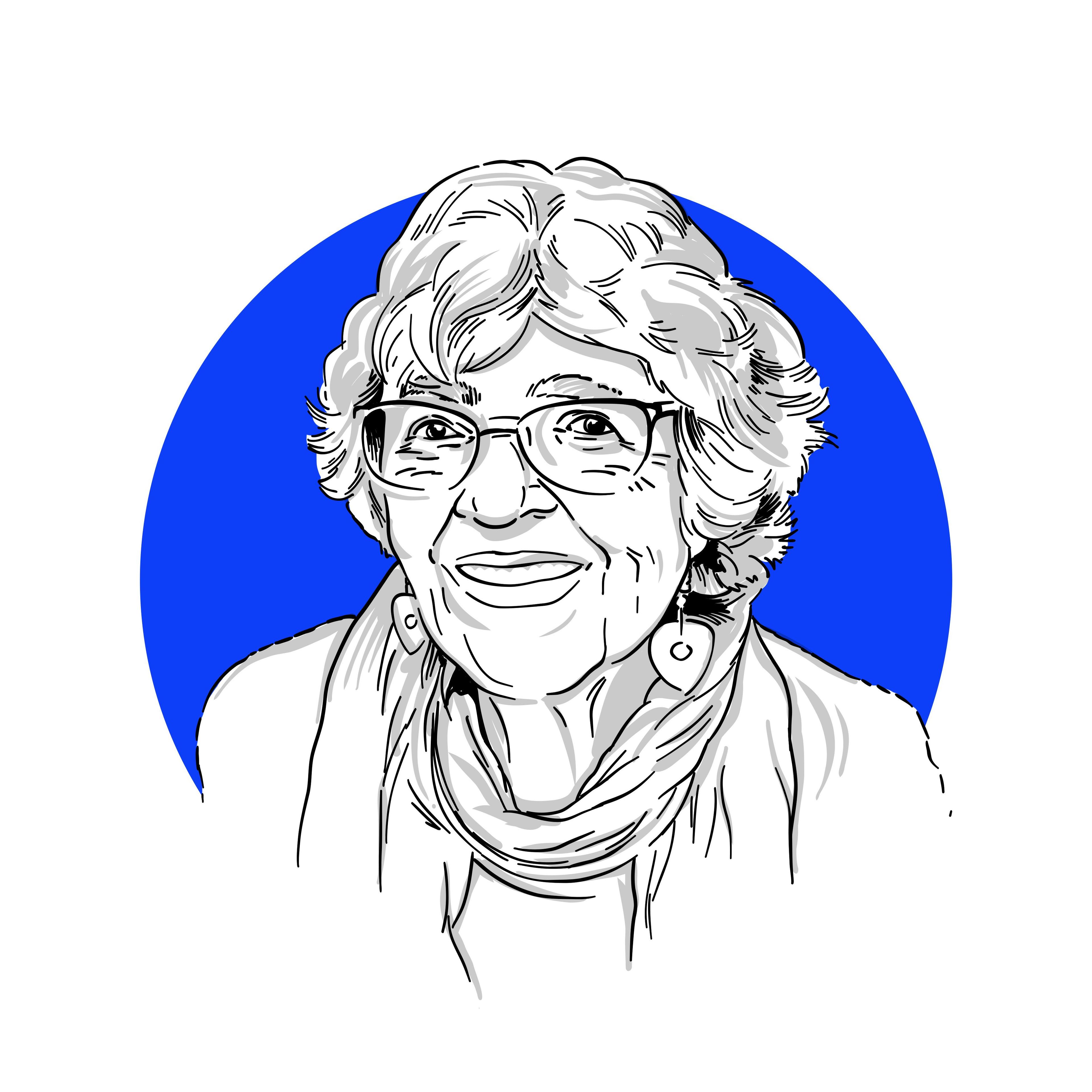
What started as young curiosity blossomed into a lifetime of welcoming newcomers for Judy Denison of Denver, Colorado.
“People say… would you invite a stranger to your house? I’ve done it my whole life, and it always worked out well,” Judy said.
Whether befriending a displaced Yugoslavian man as a teenage camp counselor, traveling to Europe during graduate school, hosting international students, or informally welcoming Polish refugees to her home in the 1980s, Judy’s natural curiosity attracted her to newcomers’ stories.
She quickly learned how much they had in common: “I recognized that they were people just like me.”
After years of opening her heart and home to others, Judy formally got involved in welcoming as a cultural mentor with Lutheran Family Services. She later volunteered with the International Rescue Committee (IRC), collecting furniture for home set-ups for newly arrived families. Judy launched a partnership with a generous local estate sale company and real estate agency. After an estate sale, the company donated any remaining items, the real estate agency volunteered their truck, and Judy—with a contingent of neighbors and friends—ensured items got distributed to newcomer apartments.
As part of her nomination, Judy earned recognition for, “collecting and delivering the furnishings for nearly every refugee family resettled by the IRC [in Golden, Colorado] from 2020 to 2025.”
In December 2023, Judy opened her home to a young couple from Ecuador whose family was extorted by gangs. Judy said they have rescued each other in times of need—while she extended her home to the young couple as they rebuilt their lives, the woman quickly sought help when Judy faced a medical emergency last year.
“A month after I took her in, she saved my life,” Judy shared.
Welcoming has been a constant thread in Judy’s life, and she has no intention of slowing down. As the work grows harder, she simply leans in: “Why would I do anything else?”

Meet Felisa
Commonality through language and perspective
A veteran, a poet, an artist, a stroke survivor, a Welcomer—Felisa Hervey is all of these, and together her experiences have shaped a rare perspective that fuels her dedication to Afghan families.
Felisa spent much of her childhood in Chile and Kazakhstan with missionary parents. Her exposure to other cultures at an early age sparked a love of languages.
Just months before the Sept. 11 attacks on the World Trade Center, she joined the U.S. Air Force Academy, and before graduating, she moved to Kabul to work at an Afghan orphanage. The experience provided her with a glimpse of what was happening on the ground in Afghanistan.
By the time Felisa reached her early 20s, she spoke English, Spanish, Kazakh, Russian, and Dari. Her passion for Dari was particularly beneficial as she developed relationships with Afghans during her two years of service there. In 2015 while still in Afghanistan, Felisa experienced a stroke and soon returned to the U.S.
Shortly after Kabul fell in 2021, Felisa rolled up her sleeves. As a result of her stroke she lived with aphasia, leading to a loss of language—but not intellect. With the help of her husband, Nick, and many others, she established Mule Train Rescue in Tucson, Arizona, an organization that supports Afghan writers.
Felisa and her family later moved to Albuquerque, New Mexico. She reached out to No One Left Behind hoping to sponsor an Afghan family that spoke Dari.
“I was looking for a family with children the same age as my daughter, Alma. And then, we found a family with six kids,” she said.
Felisa pulled together a group of friends who shared responsibilities for funding, communication, and logistics during the sponsorship process. The community offered a warm welcome, and as four of the children attended refugee summer school, they quickly began bonding with classmates and teachers.
“They are kind, smart, delightful people,” Felisa shared. “One daughter dances and is an artist, and another daughter plays the guitar and sings. One son plays soccer. They are a fun family.”
Felisa acknowledges that welcoming takes a lot of work and time—but, “we are still plugging away… The team is still at it. The work hasn’t stopped.”
Welcoming this family is showing her a new sense of freedom, and she hopes more Americans are inspired to “open their hearts to help people.”

Meet Steve
Moved by faith and anchored in history
Welcoming was never a question for Deacon Steve Beumer: “It's just doing what I'm supposed to be doing. I'd feel funny doing any other thing. I don't know why somebody who came from immigrant roots wouldn't be enthusiastic about welcoming new folks here.”
As a deacon in the Evangelical Lutheran Church in America (ELCA) in Florida, Steve is part of a long history of welcoming that’s guided by faith. The ELCA has been a leader in welcoming newcomers, going back to Lutheran immigration and refugee services, which is now Global Refugee. Since its start in the 1990s, he estimates his church has welcomed hundreds of refugees and newcomers from Vietnam, Haiti, Turkey, and elsewhere.
One of the more recent calls for an airport pickup led to one of Steve's favorite success stories. He arrived at the airport with a group of people to welcome newcomers from Iraq and Ethiopia, realizing one man exited the plane looking a little unsteady and bewildered. Steve approached the man to welcome him, and discovered he was blind. As he helped the man settle into his new community he asked what he planned to do: he wanted to pursue a law degree.
Knowing this man had just left a migrant camp and landed in a new country with a disability, Steve suggested taking it slow—but the man was insistant. He aced his LSATs and they enrolled him in a law program through Capital University in Columbus, Ohio.
“He graduated, and now he’s a lawyer. There you go,” shared Steve.
Steve is grateful his Florida community has been generally supportive, as people have opened their hearts and homes to newcomers. For those who still question the benefits of welcoming the stranger, he said, “...every once in a while you gotta reach under the pew and crack open that book. That'll tell you what to do.”
Welcoming is not new or unusual—it’s natural. “Please just open your mind up to the possibilities of those around you,” Steve shared. “And when it says in the book about seeing the face of Jesus and other people, then take that to heart.”

Meet Heather
Inspired and motivated by refugees
Heather Tinney didn’t anticipate working in refugee resettlement. Today, it’s not just her job, it’s her whole life—and something her family and community wholeheartedly support.
“We could have been born [in] any place in this world. We were so blessed to be born here," she said.
"I can only imagine if I was born in a place that was unsafe and didn't have what we have over here, I would be doing the same thing for my children."
Heather leaned into humanitarian work, and eventually took a role as a case manager with North Carolina African Services Coalition in Greensboro. Now working as housing coordinator at the coalition, she is amazed by the community support. When a new family arrives, a group of women at Guildford College United Methodist Church quickly pull donated dishes, bedding, furniture, toys, and more. Other community members pitch in for airport pickups, transportation, and simply visiting to help newcomers feel at home.
Making it feel like home is especially important to Heather, who lives with her family in the same apartment complex as her clients. About 95% of residents are refugees. Her kids play with their kids. She remains on call 24-7, whether a resident is a client of the coalition or not.

“I'm that person that if something is going on, you definitely want to get me involved, because I can't sleep at night if it's not right. I'm going to make sure that we figure it out. I will get you some resources. I'm going to at least know that I tried my best to help you out.”
Heather recognizes the heart of welcome in her greater community as people eagerly rally to support refugees and truly help them to feel like family. The Greensboro community has welcomed refugees for decades, supporting newcomers who have thrived in college and excelled in roles as nurses or lawyers.
“They've all grown up and become great, amazing people,” Heather said. “Everybody just wants a chance at a good life. Literally, that's all it boils down to.”
Judy, Felisa, Steve, Heather, and dozens of Welcomers like them across the country are shining examples of welcoming in action in their communities. Visit The Heart of Welcome page for more about this year's nominees, then learn how you can join them by getting involved in welcoming today.
More stories of welcome