5 ways newcomers contribute to the economy

Beyond the headlines, we’re digging into questions that really matter. First up: How do newcomers contribute to the economy?
The answer is clear: newcomers aren’t just part of the U.S. economy—they are driving it. In big cities and rural towns alike, they are working, innovating, and strengthening the communities they now call home.
While some headlines raise questions about their impact, the data tells a different story. Here are 5 key facts that can help you better understand—and talk about—the role newcomers play in our economy.
1. Newcomers have cut the U.S. deficit by $14.5 trillion since 1994.
Over the past 30 years, newcomers have helped shrink the federal deficit by nearly a third.
How? They contribute more in taxes than they receive in public benefits, and they tend to work longer before retiring.
One recent study found that, over a 15-year period, refugees and asylees contributed roughly $581 billion in taxes (including income, payroll, sales, and property taxes), while receiving $457 billion in services. That’s a net contribution of $123.8 billion to the public good.
Bottom line: Newcomers pay in more than they take out.
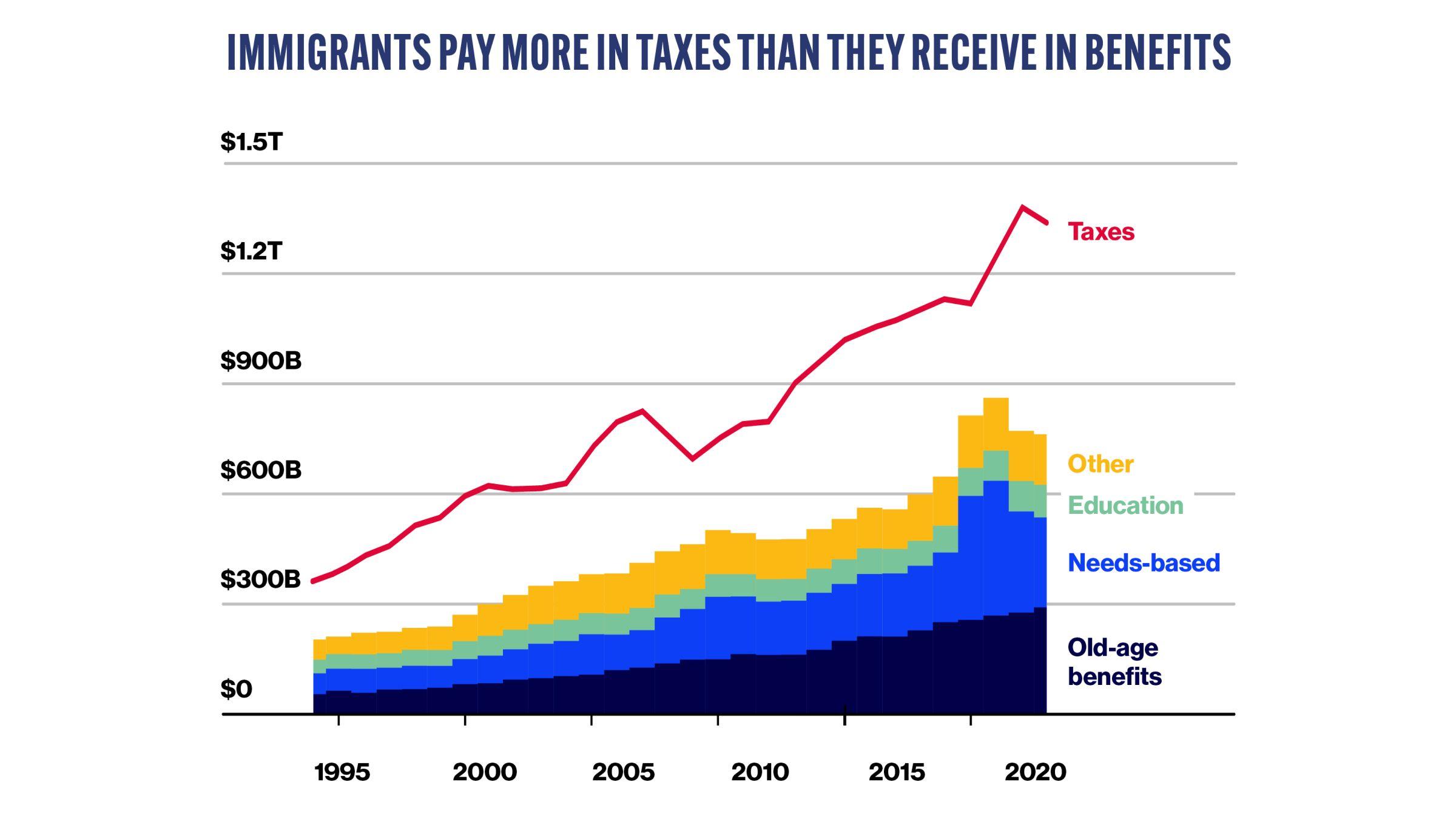
This graph illustrates the costs and taxes generated by immigrants to the U.S. government from 1994–2023. Source: Annual Social and Economic Supplements of the U.S. Census Bureau's Current Population Survey for March 1994-2023; and "National Data: National Income and Product Accounts," Bureau of Economic Analysis.
2. Immigration increases wages for U.S.-born workers.
A common concern is that newcomers compete with American workers and drive wages down. But 20 years of data shows the opposite: Wages for U.S.-born workers tend to rise in communities with more immigrants.
That’s because newcomers often fill gaps in the labor market rather than replace existing workers. When businesses can hire the workers they need, they grow—and growing businesses create more jobs and higher wages.
Bottom line: Immigration helps businesses expand, which benefits workers across the economy.
3. Immigration is revitalizing rural communities.
Many rural communities have faced years of population decline, shrinking workforces, and struggling local economies. Newcomers are helping turn that around. Today, immigration accounts for nearly half of all population growth in rural America.
Newcomers are filling critical workforce needs. In communities like Carrington, North Dakota, newcomers are working in agriculture, construction, childcare, and healthcare—key industries with open positions that couldn’t be filled locally. They’ve enrolled their children in local schools and have become regulars at neighborhood businesses.
Bottom line: Newcomers are helping rural communities grow again.
4. Newcomers are essential to critical U.S. industries.
Many of the industries Americans rely on every day depend heavily on immigrant workers.
Nearly 30% of home health aides are immigrants, alongside significant shares of workers in healthcare (18.6%), construction (13.7%), agriculture (12.7%), and technology (20%).
These roles are often hard to fill, and without newcomers, many sectors would face serious labor shortages—affecting everything from food supply to elder care.
Bottom line: Newcomers help keep essential industries running.
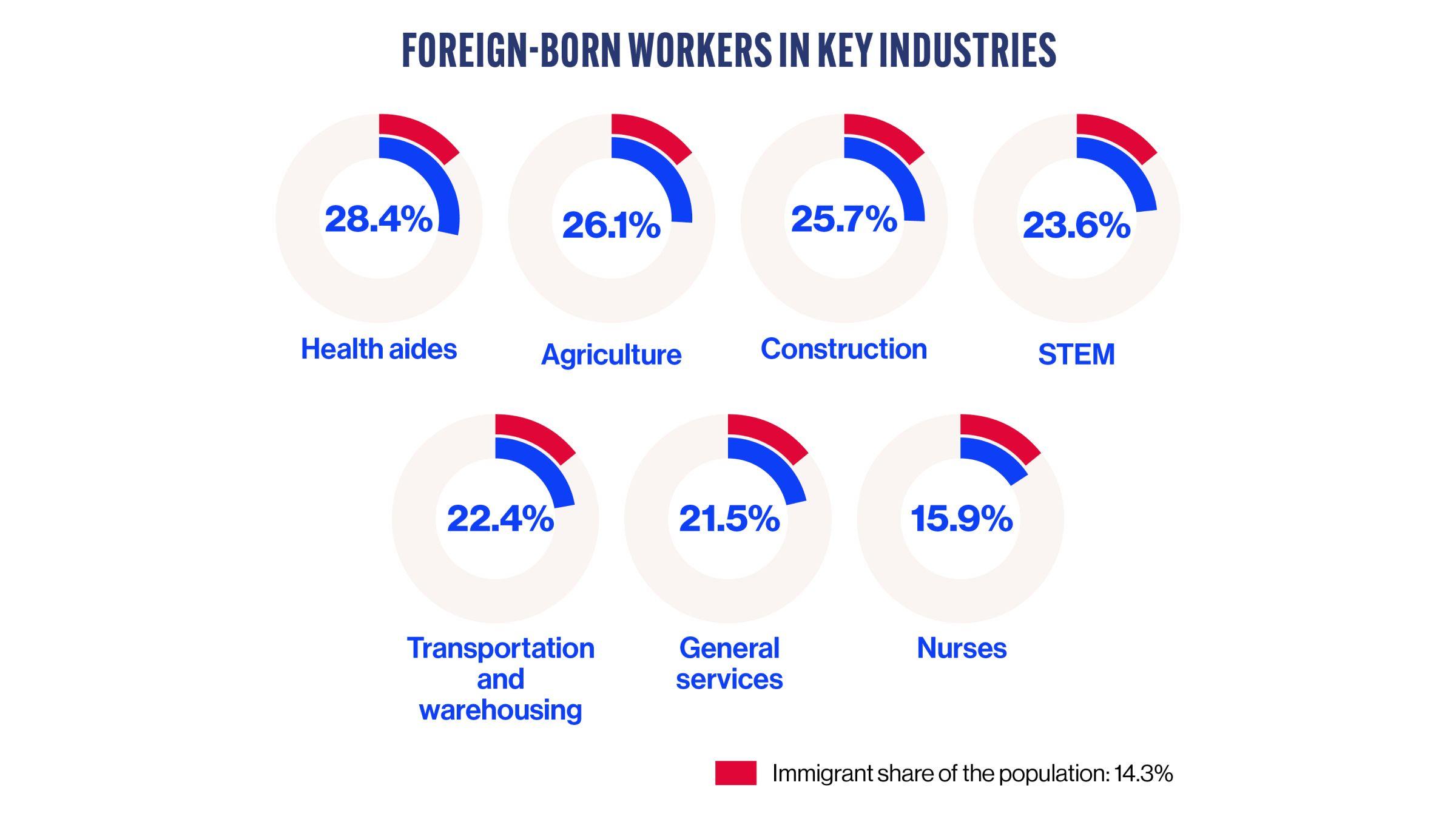
Immigrants are strengthening the American labor force and filling serious labor shortages. Source: American Immigration Council
5. Newcomers are driving entrepreneurship and job creation.
Immigrants make up 24% of business owners in the United States and start about 1 in 5 new businesses.
Their impact is growing: Immigrant-owned businesses have nearly doubled since 2003 and now employ nearly 8 million Americans.
They’re also behind nearly half of Fortune 500 companies, helping position the U.S. as a global leader in innovation.
Bottom line: Newcomers don’t just fill jobs—they create them.
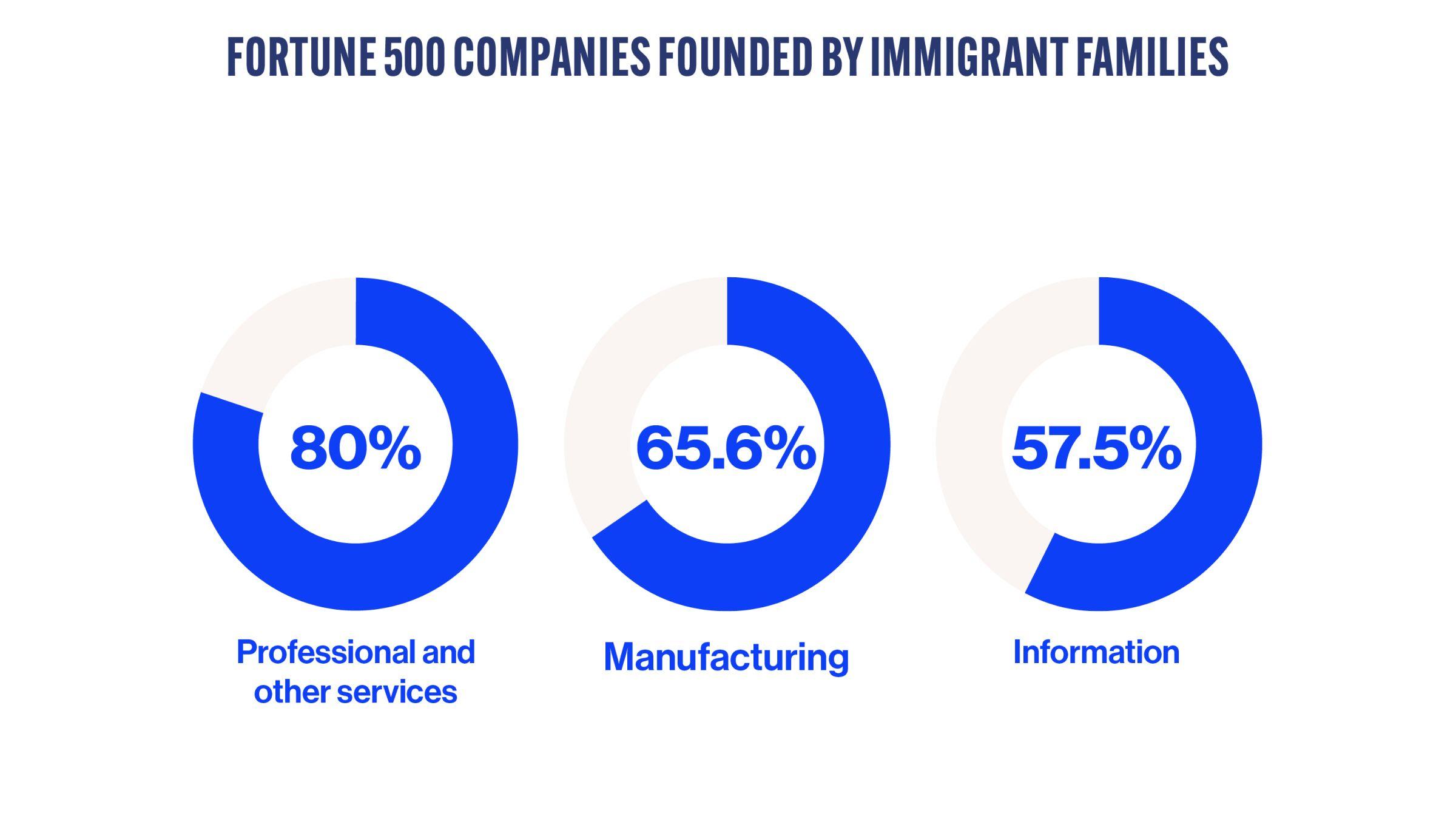
In 2025, nearly half of all Fortune 500 companies were founded by immigrants or their children, generating $8.6 trillion in revenue. Source: American Immigration Council
Together, these facts point to a bigger truth: Newcomers are not just contributing to the U.S. economy, they are helping shape its future. And that’s the story we don’t always see in the headlines.